Merzouga Weather: Month-by-Month Temperatures, Seasons and What to Expect
Merzouga weather is hot, dry and sunny for most of the year, with big differences between day and night. The village sits in the Sahara at the edge of the Erg Chebbi dunes, in a hot desert climate: very hot summers, mild to warm winter days, cold winter nights, almost no rain and long hours of sunshine. This guide explains the weather in Merzouga month by month, what each season feels like in the dunes, how wind, rain and sandstorms can affect your plans and what to pack. All temperatures below are typical approximate values from general climate knowledge and can vary from year to year, so always check a live forecast a few days before you travel.

Merzouga weather in short
- Climate: hot desert, with very low rainfall and low humidity.
- Hottest months: June to August, with daytime highs often above 40 °C.
- Coolest months: December to February, with pleasant days and cold nights.
- Best comfort: March to May and September to November.
- Rain: rare, but short storms can happen, mainly in autumn and spring.
- Sun: plenty of sunshine in every month, so the sky is usually clear for sunsets and stars.
- Big daily swing: the difference between day and night can be 15 °C or more.
For an overview built around choosing a date, read best time to go to Merzouga. This page focuses on the weather itself.
Merzouga temperatures by month (approximate)
- January: highs around 18 to 20 °C, nights around 3 to 5 °C.
- February: highs around 21 to 23 °C, nights around 5 to 7 °C.
- March: highs around 25 to 27 °C, nights around 9 to 11 °C.
- April: highs around 29 to 31 °C, nights around 13 to 15 °C.
- May: highs around 34 to 36 °C, nights around 17 to 19 °C.
- June: highs around 39 to 41 °C, nights around 22 to 24 °C.
- July: highs around 42 to 44 °C, nights around 25 to 27 °C.
- August: highs around 40 to 42 °C, nights around 24 to 26 °C.
- September: highs around 35 to 37 °C, nights around 20 to 22 °C.
- October: highs around 29 to 31 °C, nights around 14 to 16 °C.
- November: highs around 23 to 25 °C, nights around 8 to 10 °C.
- December: highs around 18 to 20 °C, nights around 4 to 6 °C.
These are rounded estimates for the area, not exact measurements. The sand itself can feel much hotter than the air in the afternoon, and much colder at night.
Spring weather in Merzouga (March to May)
Spring is one of the best seasons. March days are warm and nights are fresh, April is warm and clear, and by May the heat is already strong in the afternoon. Wind is more common in this season, and some days can bring dust or light sand haze. Sunrise and sunset are beautiful, and camel rides are comfortable.
- Good for: camel rides, camp nights, quad, buggy, sandboarding and photography.
- Pack: light clothes for the day, a warm layer for the evening, a scarf for wind and dust.
- Watch out for: windy afternoons and rising heat in May.


Summer weather in Merzouga (June to August)
Summer is extremely hot, with daytime temperatures often passing 40 °C and warm nights. Many people avoid it, but it can still work if you adapt. Plan activities for early morning and late evening, rest indoors in the middle of the day and drink a lot of water. Camps in summer usually offer fans, cooling or the option to sleep outside on a mattress under the stars.
- Good for: travellers who handle heat, late sunset rides and night skies.
- Pack: loose light clothing, a wide hat, sunglasses, high-factor sun cream and an electrolyte drink.
- Watch out for: heat exhaustion, hot sand and hot cars. Avoid midday walks.
- Tip: choose a camp or hotel with a pool or air conditioning.
Autumn weather in Merzouga (September to November)
September is still hot, but October and November are among the most pleasant months, with warm clear days, comfortable evenings and excellent light for photos. Occasional storms can bring short rain, so check forecasts and follow local advice about dry riverbeds.
- Good for: all activities, especially longer camel rides and 4×4 excursions.
- Pack: light clothes plus a warm evening layer, especially from late October.
- Watch out for: rare but sudden storms.
Winter weather in Merzouga (December to February)
Winter days are mild and sunny, perfect for walking and excursions, but nights are cold and can approach freezing. This surprises many travellers, who expect warmth all year. Camps provide heavy blankets, and some have heating, but you still need warm clothes. The air is clear and the stars are spectacular on cloudless nights.
- Good for: travellers who dislike heat, stargazing and long activity days.
- Pack: a warm jacket, hat, gloves, thermal layers and closed shoes.
- Watch out for: cold early mornings, especially at sunrise on the dunes, and snow or ice on the Atlas passes if you are driving from Marrakech.
A full season-by-season clothing list is in what to wear in Merzouga.
Rain in Merzouga
Annual rainfall is very low, and many months have none at all. When rain does come, it is usually a short, sharp storm, mostly in autumn and spring. In rare years heavy rain can fill dry riverbeds and temporarily create shallow lakes near the dunes, which attract birds and make unusual photos. Heavy storms can also cause flash floods, so never camp or park in a dry riverbed, and follow your guide’s advice. More safety points are in is Merzouga dangerous.
Wind and sandstorms
Wind is part of desert life. A warm, dry wind can blow from the south or east, especially in spring and summer, lifting dust and sand and reducing visibility. A sandstorm is uncomfortable but usually short, and local guides know how to respond. Bring a scarf to cover your mouth and nose, sunglasses and a bag to protect cameras. Activities may be delayed or shortened on windy days.
Day and night temperature differences
One of the most important things to understand about Merzouga weather is the daily temperature swing. The dry air and clear sky mean heat escapes quickly after sunset. A warm afternoon can turn into a cool evening within a couple of hours. Even in spring and autumn, a jumper or jacket is useful at night. In winter, you need real cold-weather clothing.


How the weather affects your activities
- Camel ride: best at sunset or sunrise in every season. In summer avoid midday.
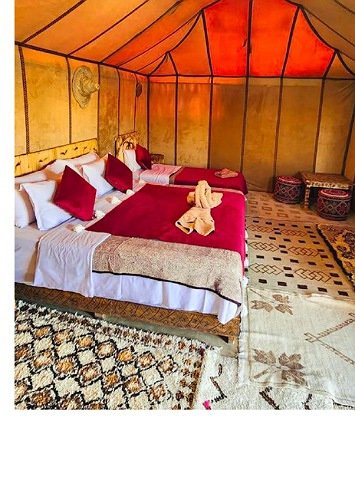
- Camp night: excellent in spring and autumn, hot in summer, cold in winter. Choose your tent type accordingly.
- Quad and buggy: good all year, with dust protection on windy days and early or late timing in summer. See quad bikes and buggy in Merzouga.
- Sandboarding: best in the morning or evening when the sand is cooler.
- 4×4 excursions: comfortable with air conditioning in summer, and useful in cold winter mornings.
- Stargazing: best on clear, moonless nights, most often in cooler months.
More ideas by season and traveller type are in Merzouga activities and Merzouga excursion.
Weather on the road to Merzouga
The weather in Merzouga is only part of the story, because the road passes through mountains with their own climate. The High Atlas around Tizi n’Tichka and the Middle Atlas near Ifrane and Midelt can be cold, foggy or snowy in winter, even when the desert is sunny. Check road conditions before departure, drive in daylight and allow extra time. Route details are in how to get to the Merzouga desert, tour from Fez to Merzouga and Marrakech to Merzouga.
Packing list for Merzouga weather
- Light breathable clothes covering shoulders and legs for sun and cultural respect.
- Warm layer or jacket for the evening, thicker in winter.
- Hat, sunglasses and a scarf or buff.
- High-factor sun cream and lip balm.
- Closed shoes for sand and sandals for camp.
- Reusable water bottle and rehydration salts.
- Torch or head lamp, power bank and a small bag for overnight items.
- Moisturiser, because the air is dry.
Which month is best for you?
- You want comfortable temperatures: March, April, October, November.
- You want warm swimming-pool weather: May, June or September, with air-conditioned lodging.
- You want clear winter skies and stars: December to February, with warm clothing.
- You want fewer crowds: summer and mid-winter are quieter.
- You travel with children or seniors: spring and autumn are easiest.
If you are unsure whether the effort of the trip is worth it, read is going to Merzouga worth it and the Merzouga desert complete guide.
Merzouga weather: frequently asked questions
What is the weather like in Merzouga?
Hot, dry and sunny, with very hot summers, mild winter days, cold winter nights and very little rain.
What is the hottest month in Merzouga?
July, usually, followed closely by August and June, with highs often above 40 °C.
What is the coldest month in Merzouga?
January is typically the coldest, with nights that can fall to just a few degrees above freezing.
Does it rain in Merzouga?
Rarely. Short storms can happen, mostly in autumn and spring, and heavy rain can occasionally cause flash floods.
Is it cold in the desert at night?
Yes, in most seasons evenings are cool and winter nights are cold. Bring warm layers even if the day is hot.
Can I visit Merzouga in summer?
Yes, with preparation. Schedule activities early or late, drink plenty of water and choose air-conditioned or well-ventilated lodging.
When is the best weather for stargazing?
Any clear, moonless night. Autumn, winter and spring are often most comfortable for staying outside.
Are sandstorms common?
Wind and dust happen, mainly in spring and summer, and strong sandstorms are occasional. Guides adjust plans when needed.
What should I wear in Merzouga?
Light, loose clothing for the day, a scarf and sunglasses, and a warm layer for evenings. See what to wear in Merzouga.
Where can I check the current forecast?
Use a weather app or national forecast for Merzouga or nearby Erfoud, and message your host the day before for local conditions.
Plan your trip around the Merzouga weather
Tell us your dates and we will suggest the best timing for activities, the right type of camp for the season and what to pack. Message us on WhatsApp at +212 620 628 083 or use the contact page. When you are ready, read how to book a Merzouga tour.