Is Merzouga Dangerous? Honest Safety Guide for the Sahara Desert
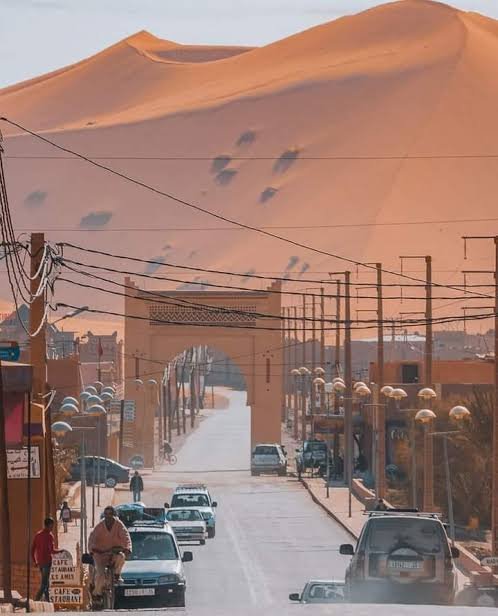
Is Merzouga dangerous? For the great majority of visitors, no. Merzouga is a small, long-established tourist destination at the edge of the Erg Chebbi dunes, and thousands of travellers spend a night in the desert here every year without any problem. The real risks are practical rather than dramatic: heat and dehydration, cold desert nights, long mountain drives, pushy sellers, accidents on quad bikes and the simple fact that you are far from big hospitals. This guide explains each risk honestly, shows how to reduce it and answers the most common safety questions, including those from solo women, families and first-time visitors. Conditions can change, so always check your government’s current travel advice before you go.
The short answer: is Merzouga dangerous or safe?
Merzouga is generally considered a calm and welcoming place for tourists. Violent crime against visitors is not a typical problem, the local economy depends on tourism, and guesthouses, camps and guides have strong reasons to treat guests well. Still, “safe” does not mean “risk-free”. The desert is a demanding environment, and most incidents come from preventable things: not drinking enough water, travelling at night, taking an unlicensed quad ride or booking with an unreliable intermediary.
- Low risk: violent crime, serious theft in camps, kidnapping or similar fears.
- Moderate risk: scams, over-persistent sellers, uncomfortable situations for solo women, food upsets.
- The risks that need attention: heat, cold, dehydration, road travel, quad and buggy accidents, sandstorms and flash floods.
For a broader view of the whole country, read is it safe to visit Morocco.
Heat and dehydration: the most common problem
From June to September the temperature in the dunes can pass 40 °C during the day, and the sand reflects the sun. Heat exhaustion is the most frequent problem for visitors, and it can be serious if ignored. Symptoms include headache, dizziness, nausea, heavy tiredness and very dark urine.
- Drink water regularly, before you feel thirsty. Many travellers carry 2 or more litres for a day trip.
- Wear a hat, sunglasses and high-factor sunscreen, and cover your skin with light, loose clothing.
- Avoid strenuous walks in the dunes between late morning and late afternoon in summer.
- Plan the camel ride for the evening, when the heat falls.
- If someone feels unwell, move them to shade, give small sips of water, cool the body and seek medical help if it does not improve quickly.
Seasons matter. The best months for comfort are described in the best time to go to Merzouga guide.
Cold nights: a surprise for many travellers
The desert loses heat quickly after sunset. In winter, nights can drop close to freezing, and even spring and autumn evenings are cool. Most camps provide thick blankets, but you should still bring warm layers, socks and a hat. Being cold is uncomfortable rather than dangerous in a camp, but it can spoil the night and cause problems for children and older travellers. See what to wear in Merzouga for a season-by-season packing list.


Sandstorms and wind
Wind and sand can arrive quickly, especially in spring and early summer. A sandstorm is not usually life-threatening for someone with a guide and shelter, but it reduces visibility, irritates eyes and lungs and can interrupt activities.
- Carry a scarf or buff to cover your nose and mouth.
- Wear sunglasses or glasses rather than contact lenses on windy days.
- Protect cameras and phones with a bag or case.
- Follow your guide’s decision to delay a ride or return early.
- Do not walk alone into the dunes in poor visibility.
Getting lost in the dunes
The dunes look the same in every direction, and footprints disappear in the wind. Walking far away from the camp at night, without a guide, a light or a phone with signal, is a real risk. Climbing the nearest dune for sunrise is fine, but tell someone where you are going, take a torch and a charged phone, and stay within sight of the camp.
Road safety: the biggest real risk of the trip
For most travellers the most dangerous part of a Merzouga trip is not the desert but the drive to reach it. Distances are long, the Atlas passes are winding, and some roads have trucks, animals and pedestrians. Fatigue is a factor on 8 to 10-hour days.
- Avoid driving at night, especially outside towns.
- Prefer a professional driver or a reputable tour if you are unsure about mountain driving.
- Check weather for the Tizi n’Tichka pass in winter, where fog, ice and snow can occur.
- Wear seat belts and do not push for a single-day marathon trip.
- Split the journey into two or three days. Options are in how to get to the Merzouga desert and best way to travel from Marrakech to Merzouga.
If you rent a car, read car rental in Morocco for insurance and documents.
Quad bikes and buggies: fun, but the activity with the most accidents
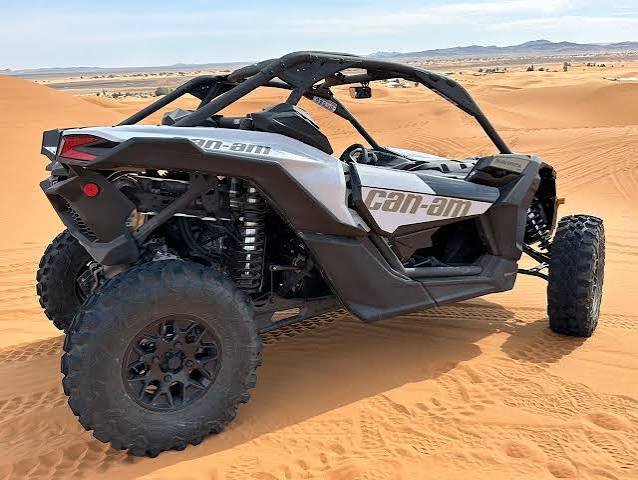
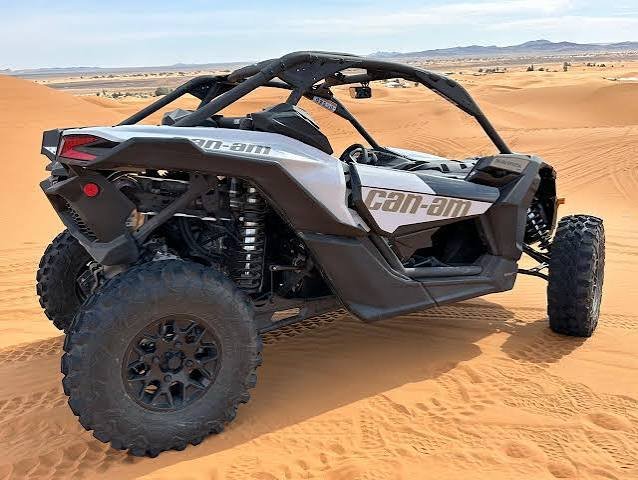
Quads and buggies are among the most popular activities, and also the one where tourists most often get hurt, usually through speeding, collisions or rolling on a dune slope. The risk drops sharply with a good operator.
- Choose a company with maintained machines, helmets and a guide who rides with the group.
- Ask about insurance and what happens if there is an accident.
- Follow the guide’s speed and route, and do not race.
- Wear closed shoes, long trousers, goggles and a scarf.
- Be honest about your experience, and do not ride if you feel unwell or have had alcohol.
Details are in quad bikes and buggy in Merzouga: tours, safety and what to expect.

Camel rides: are they safe?
A guided camel ride is slow and generally low-risk, including for children and beginners. Camels sit down and stand up with a sudden lurch, so hold the saddle handle firmly when mounting and dismounting. Wear comfortable trousers, and follow your guide’s instructions. Anyone with back problems or pregnancy should ask a doctor first.
Flash floods and rain
Rain is rare in the Sahara, but when heavy storms arrive, water can run through dry riverbeds (wadis) very quickly and cause flash floods. Local communities have experienced flooding in some years. Do not camp or park in a dry riverbed, check the forecast during autumn and storm season and listen to local advice. Good operators will adapt or cancel activities if the weather is dangerous.
Scorpions, snakes and insects
Desert animals exist, but encounters with tourists are uncommon. Scorpions and snakes avoid people and hide during the hot day. Sensible habits are enough:
- Shake out shoes and clothes before wearing them.
- Do not put your hands under rocks or into holes.
- Use a torch when walking at night and wear closed shoes.
- Keep food sealed in your tent.
- Seek medical help if you are bitten or stung, and do not try risky home remedies.
Scams, touts and pushy sellers
The most common unpleasant experience in Merzouga and the nearby towns is not danger but pressure: people offering tours, guides or souvenirs very persistently, or “friendly” strangers who later ask for money. This is annoying rather than harmful, but a few precautions help.
- Book your tour or camp in advance with a provider you have checked, rather than on the street.
- Agree on the price and what is included (transport, camel ride, dinner, breakfast, drinks) before you accept anything.
- Be careful with “free” guides who then expect payment.
- Say “no, thank you” politely and keep walking.
- Use only official guides for sites and carry small change for tips.
For how to pick a trustworthy company, read best Morocco travel agency: how to choose a reliable one and book a Merzouga tour.
Is Merzouga safe for solo women?
Many solo women visit Merzouga without problems, especially on organised tours and in well-reviewed camps. Verbal attention and unwanted comments can happen in Moroccan towns, and the best approach is practical: dress modestly in villages, avoid walking alone at night, choose camps with good reviews, share your live location with a friend, and trust your instincts about drivers and guides. A shared group tour is a particularly comfortable option for first-time solo travellers. Full advice is in Morocco solo female travel.
Is Merzouga safe for families and children?
Yes, many families come with children, and the dunes are a highlight for them. The key points are heat, sun protection, water, a 4×4 transfer instead of a long camel ride for very young children, and warm clothes at night. Keep children close to the camp, supervise them on dunes and check that quad or buggy rides are suitable for their age. See Morocco 10 days itinerary with kids.
Health, food and medical help
- Drinking water: use sealed bottled water, and avoid ice of unknown origin.
- Food: camp dinners are cooked fresh and are usually safe. Choose busy, clean places in towns.
- Medicines: bring personal prescriptions, rehydration salts, anti-diarrhoea tablets, painkillers, plasters, insect repellent and sun cream.
- Medical help: small pharmacies and basic clinics exist in nearby towns such as Rissani and Erfoud. Larger hospital services are in Errachidia, which is about 120 to 130 km away, see closest city to Merzouga.
- Insurance: travel insurance covering adventure activities such as quad riding is strongly recommended.
Is it safe to sleep in the desert?
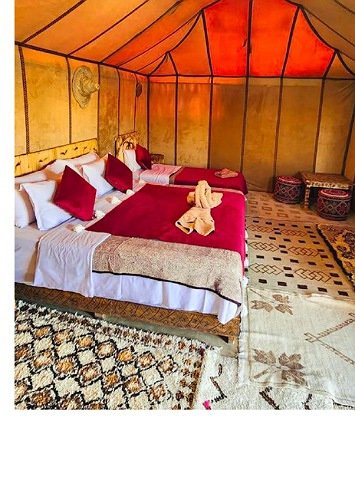
Staying in an established camp is a standard, safe tourist experience. Camps have staff on site, shared dining areas, lighting and often fenced or clearly organised tents. Differences between camps are real, so check reviews, toilets and showers, how far the tent is from the main area, and whether lockable or private options are available. Valuables are best kept with you or in a locked bag. More on what a night is like is in spend a night in the desert in Merzouga and bivouac in Merzouga. For comfort-focused options, see best luxury in Merzouga.

Merzouga and the Algerian border
Merzouga is not far from the Moroccan-Algerian border, which is closed, and this worries some travellers. In practice, the tourist area around the Erg Chebbi dunes operates normally, and visitors do not need to go near the border. Do not wander toward restricted areas, follow your guide, and read your government’s up-to-date travel advice. Border situations can change, so check shortly before departure.
Theft and personal safety
Petty theft can happen anywhere tourists gather, though it is less common in small desert places than in big city medinas. Keep your passport, cash and phone secure, avoid displaying expensive items, use a small lock on your bag and do not leave valuables on the sand or in an open car. If something happens, report it to your accommodation and the local police and keep any documents for insurance.
Respect and etiquette: avoiding uncomfortable situations
A little cultural awareness prevents most misunderstandings. Dress modestly in villages and towns, with shoulders and knees covered, ask permission before photographing people, avoid public displays of affection, and do not drink alcohol in public places. Tipping guides, drivers and camp staff is customary and appreciated. Respect during Ramadan, when many restaurants are closed in daytime.
A practical safety checklist for Merzouga
- Book with a reviewed, reachable provider and confirm the details in writing.
- Carry water, sun protection and a warm layer.
- Take cash and a power bank.
- Keep copies of your passport and insurance details.
- Avoid night driving and walking alone far from the camp.
- Check the weather for wind, heat and storms.
- Choose reputable quad and buggy operators.
- Check your government’s travel advice and Morocco’s entry rules in Morocco visa.
- Share your itinerary with someone back home.
If you are wondering whether the trip is worth the effort at all, is going to Merzouga worth it gives an honest answer, and what is Merzouga introduces the place.
Is Merzouga dangerous? Frequently asked questions
Is Merzouga safe for tourists?
Yes, in general. Tourism is the backbone of the local economy, and visitors come in large numbers. The main risks are heat, travel and activity-related accidents rather than crime.
Is it dangerous to sleep in the Sahara desert?
Not in an established camp with staff. It is a standard tourist experience. Prepare for cold nights and choose a camp with good reviews.
Is Merzouga safe for solo female travellers?
Many women travel there alone without problems. Use a reputable provider, dress modestly in towns, avoid isolated walks at night and trust your instincts.
Are there dangerous animals in Merzouga?
Scorpions and snakes exist but are rarely seen. Shake out your shoes, use a torch and wear closed footwear.
Is it safe to ride a quad or buggy in Merzouga?
It can be, with a reputable operator, helmets, a guide and sensible speed. It is the activity with the highest accident risk, so choose carefully and check insurance.
Is Merzouga safe with children?
Yes. Protect children from sun and heat, keep them close in the dunes and bring warm clothes for the night.
Is Merzouga too close to the Algerian border?
The tourist area operates normally, and you do not need to approach the border. Check your government’s latest advice before travelling.
What should I do if I feel unwell in the desert?
Move to shade, drink water in small sips, rest and tell your guide. Seek medical help early if symptoms are strong or last. Nearby towns have basic care and Errachidia has a hospital.
When is the safest time to visit Merzouga?
Spring and autumn are the most comfortable. Summer is extremely hot, and winter nights are cold, though both are manageable with preparation.
Travel to Merzouga with a team that looks after you
Questions about safety, weather or the best option for your family or group? Tell us your dates and who is travelling and we will advise honestly. Message us on WhatsApp at +212 620 628 083 or use the contact page.