Ramadan in Morocco: What Travellers Need to Know Before They Go
Ramadan in Morocco is the holy month when Muslims fast from dawn to sunset, and visiting during this time is possible and can be a special experience. Hotels, riads, transport and desert tours keep running, but daily life changes: many cafés and restaurants are closed or quiet during the day, shops open later, and the busiest and happiest time is the evening, when families break the fast together. If you are planning a trip that overlaps with Ramadan, this guide explains when it happens, what changes for visitors, how tours and the desert camps work, what to wear and how to be respectful, so you can decide if it fits your plans and enjoy it.
Ramadan dates depend on the moon and are confirmed locally shortly before the month starts, so use the dates below as an estimate and check them closer to your travel date.
Ramadan in Morocco at a Glance
| Question | Short answer |
|---|---|
| What is Ramadan? | The ninth month of the Islamic calendar, a month of fasting, prayer and charity |
| How long is it? | 29 or 30 days |
| When is it? | It moves about 10 or 11 days earlier each year. In 2027 it is expected around February and March |
| Can tourists visit? | Yes. Hotels, transport and tours keep running |
| Do tourists have to fast? | No. But please eat and drink discreetly in public |
| Best part of the day | The evening, after sunset |
| Is the desert open? | Yes. Camps and camel rides continue |
When Is Ramadan in Morocco?
Ramadan follows the Islamic lunar calendar, which is shorter than the usual calendar, so the dates shift earlier each year. For 2027 it is expected to start around the second week of February and to end around the second week of March. The exact start depends on the sighting of the new moon, and Moroccan authorities announce it shortly before the month begins. The end of Ramadan is marked by Eid al-Fitr, a joyful national holiday of about two days.
What Changes for Visitors During Ramadan
- Daytime is quieter. Many Moroccans fast and rest, so streets and souks can feel slow in the morning and early afternoon.
- Opening hours change. Offices, banks and shops often open later and close earlier. Some local cafés and restaurants close during the day.
- Tourist places keep serving. Hotels, riads and many restaurants in tourist areas still serve food and drinks to visitors.
- Alcohol is harder to find. Some bars and shops limit or stop alcohol sales during the month. Hotels that normally serve it may do so more discreetly.
- Rush before sunset. Roads and markets are busy just before the evening meal, then streets go quiet while families eat.
- Nights are lively. After the meal, people go out, cafés fill up, and many markets stay open late.
A Typical Day During Ramadan
| Time | What happens |
|---|---|
| Before dawn | Families eat the early meal (suhoor) and start the fast |
| Morning | Quiet streets, shops open late |
| Afternoon | Rest, then a rush to buy food for the evening |
| Sunset | The fast is broken with dates, milk and soup. The streets are very quiet |
| Evening | Cafés, squares and markets fill up with families and friends |
| Night | Prayers, socialising and sweets, often until late |
What to Eat During Ramadan
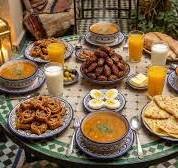
Food is one of the best parts of Ramadan. The evening meal (iftar) usually starts with dates and milk or water, followed by a hot tomato and lentil soup called harira. You will also see hard-boiled eggs, pancakes (msemen), and sweet pastries such as chebakia, a fried honey and sesame sweet, and sellou, a mix of toasted flour, almonds and sesame. Street stalls and bakeries sell these in large amounts, and many restaurants offer special iftar menus. If a local family invites you for the meal, accept if you can. It is an honour.
Tours and Desert Camps During Ramadan
Tours, drivers and desert camps continue to operate during Ramadan. A few points can help your plan:
- Your driver or guide may be fasting. Plan breaks around sunset so they can eat, and avoid very long days of driving where you can.
- Lunch stops on the road can be limited. Carry water and snacks for yourself, and eat discreetly.
- Camel rides are best in the late afternoon, and the camp dinner is served after sunset, which fits the rhythm of the month well.
- Evening music and drumming in camp may be calmer or start later. Ask your host what to expect.
Our guide to the desert camp and camel ride in Merzouga explains the evening step by step, and our guide to Morocco tour packages helps you choose the length of your trip.
Respectful Behaviour for Visitors
- Eat and drink discreetly in public places during the day. Hotels, riads and tourist restaurants are fine.
- Dress modestly. Cover shoulders and knees. Our guide on what to wear in Morocco for women has simple ideas.
- Avoid smoking and loud music in the street during the day.
- Be patient. People may be tired or slow in the afternoon. A smile helps.
- Greet people. Saying “Ramadan Mubarak” or “Ramadan Kareem” is warmly appreciated.
- Plan shopping and errands for the morning or the evening.
Eid al-Fitr: The End of Ramadan
At the end of the month, Eid al-Fitr is a national holiday. Families gather, people wear their best clothes, and sweets are shared. Many Moroccans travel to visit relatives, so trains, buses and roads are busy and hotel prices on the coast and in popular towns can rise. Many local shops close for a day or two. Book transport and rooms early for dates around Eid, and expect a quieter, family-focused city.
Is Ramadan a Good Time to Visit Morocco?
| Advantages | Things to consider |
|---|---|
| A special cultural atmosphere | Many local restaurants closed in the daytime |
| Lively, friendly evenings | Slower mornings and shorter shop hours |
| Fewer tourists, often lower prices | Alcohol is harder to find |
| Delicious seasonal food | Guides and drivers may be tired in the afternoon |
Ramadan can also fall in a cool season, which is comfortable for the desert. Check our guide to the best time to visit Morocco for the weather in each month. For general background on the month, you can read Ramadan on Wikipedia.
Frequently Asked Questions
Can tourists eat and drink during Ramadan in Morocco?
Yes. Tourists are not expected to fast. Eat and drink in your hotel, riad, or in tourist restaurants, and avoid doing it openly in the street.
Are restaurants open during Ramadan?
Many tourist restaurants and hotels stay open. Some local places close in the daytime and open after sunset.
Do desert tours run during Ramadan?
Yes. Camel rides and camp nights continue. Dinner is served after sunset.
Can I buy alcohol during Ramadan?
It is more limited. Some licensed venues reduce or stop sales, and hotels may serve it discreetly. Ask where you stay.
What should I say during Ramadan?
“Ramadan Mubarak” or “Ramadan Kareem”. Locals appreciate the greeting.
Is it hard to find transport during Eid?
It can be. Many people travel at Eid, so book trains, buses and transfers early.
Plan Your Trip With Local Help
We are a local Merzouga team, and every trip is private and flexible, including during Ramadan. Message us on WhatsApp at +212 620 628 083 or use our contact page with your dates, and we will adjust the schedule, meals and camp evening to suit the month. See also our list of things to do in Merzouga.