What to Wear in Morocco for Women: A Practical Packing and Dress Guide
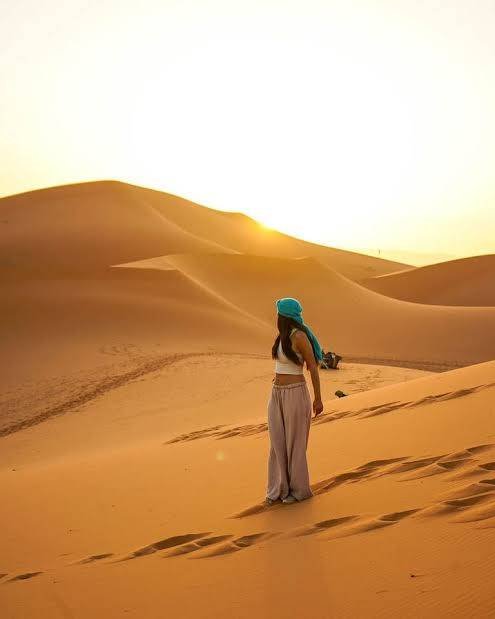
What should a woman wear in Morocco? Choose loose, light clothes that cover your shoulders and knees, bring a scarf, and pack a warm layer for evenings. Morocco is a welcoming country for female travellers, and there is no law that forces tourists to cover their hair or wear a long robe. But it is a Muslim country with conservative values, especially outside the big tourist areas, so modest clothing helps you feel comfortable, blend in and get less unwanted attention. This guide explains what to wear in Morocco for women in the cities, in the Sahara desert, in the mountains and on the coast, with a simple packing list for each season.
Local customs and weather change from place to place and year to year, so treat this as general guidance based on what travellers usually find helpful.
What to Wear in Morocco for Women at a Glance
| Question | Short answer |
|---|---|
| Do I have to cover my hair? | No. Tourists are not required to wear a headscarf |
| What is the safe rule for clothes? | Cover shoulders and knees, and avoid very tight or see-through clothes |
| Best fabrics | Cotton and linen. Loose, light and breathable |
| Can I wear shorts or a sleeveless top? | Possible in tourist riads, pools and beach towns. In streets and souks, long is better |
| Most useful item | A large scarf. It works as sun cover, dust cover and a shawl |
| Shoes | Comfortable closed shoes for the medina and the desert, plus sandals |
| Evenings | Cool in every season. Always bring a warm layer |
Is There a Dress Code for Women in Morocco?
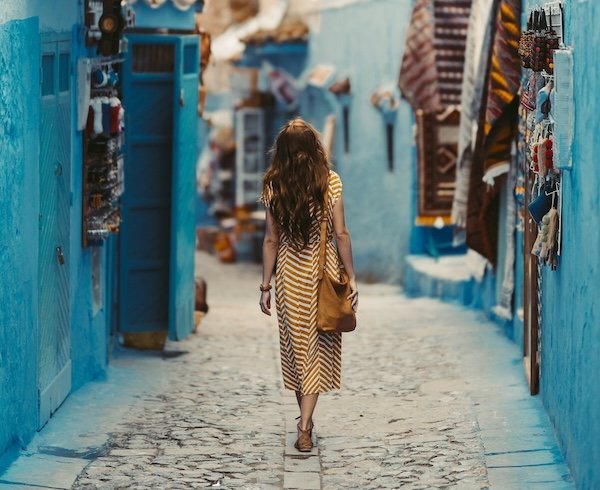
There is no official dress code for visitors. Moroccan women wear everything from a traditional djellaba to jeans and a blouse, and in big cities like Casablanca, Rabat and Marrakech you will see many styles. As a visitor, the easiest rule is to dress a little more modestly than you would at home. Shoulders and knees covered, tops that are not too low, and trousers or skirts that are not too tight. This is not about rules. It is about comfort. In souks and small towns you will feel more relaxed, get fewer stares and find people warmer when you respect local habits.
Beachwear is fine at the beach and at hotel pools. Just cover up with a long shirt or a wrap when you walk away from the sand.
What to Wear in the Cities: Marrakech, Fes and Casablanca
The old medinas are busy, narrow and full of walking, so comfort comes first. Good outfits include:
- Wide-leg or straight trousers in cotton or linen. They are cooler than jeans and look smart.
- Long skirts or maxi dresses that fall below the knee, with a light cardigan or shirt over the shoulders.
- Loose shirts or tunics with sleeves to the elbow or longer.
- Comfortable flat shoes. Medina streets are uneven, and you will walk many kilometres.
- A small cross-body bag that closes, for your phone, money and a tissue pack.
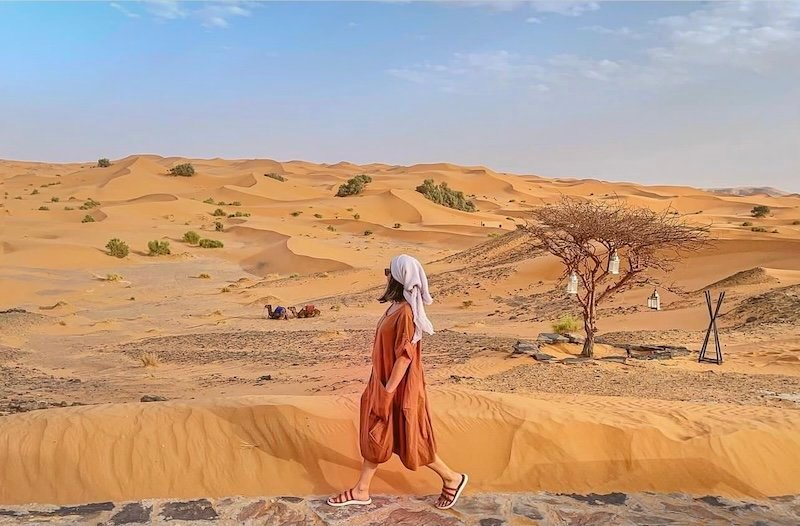
In summer, cities get very hot. Choose light colours and natural fabrics, and cover your shoulders with a thin scarf rather than taking off layers. Covered skin is often cooler than bare skin in strong sun.
What to Wear in the Sahara Desert and Merzouga
The desert is where practical clothes matter most. You will ride a camel, climb sand dunes, sit by a fire and sleep in a camp, and the temperature can change by 20 degrees or more between afternoon and night. This is also where you can relax your dress a little, because desert camps are private and used to visitors, but long and loose is still the best choice for the sun and the sand.
- A scarf or chèche. You can wrap it around your head and face for sun, wind and sand. Many camps and guides will show you how to tie it.
- Light long trousers. Loose cotton trousers or leggings protect your legs from the sun and from the camel saddle.
- A long-sleeve breathable top for the day.
- Closed shoes or trainers for walking in sand. Sandals are fine in camp, but sand gets everywhere.
- A warm layer: a fleece or jumper, and in winter a coat, hat and gloves. Desert nights are cold.
- Sunglasses, a hat and sunscreen. The sun is strong all year.
- Pyjamas or warm clothes for sleeping in the camp tent.
Skirts and dresses are not practical for a camel ride, so wear trousers for that part. If you plan a night in the dunes, read our guide to the desert camp and camel ride in Merzouga for what happens hour by hour, and our guide to camel trekking in Merzouga for longer trips.
What to Wear in the Mountains: Atlas, Todra Gorge and Chefchaouen
Mountain weather is changeable. In the High Atlas and the gorges, think in layers: a base layer, a fleece and a light waterproof jacket. Wear comfortable walking shoes or boots with good grip. In Chefchaouen, the blue town in the Rif mountains, days are mild but evenings can be cool and damp, so bring a jumper even in spring and autumn. Dress is relaxed, but modest clothes are still the norm in the village streets.
What to Wear on the Coast: Essaouira, Agadir and Taghazout
Coastal towns are more relaxed, and swimwear is normal on the beach and at the pool. Essaouira can be windy and cool even in summer, so bring a light jacket. In Agadir and Taghazout, surf and resort style is common. Outside the beach, a sarong, long shirt or light dress is a good cover-up.
What to Pack Season by Season
| Season | Weather | What to pack |
|---|---|---|
| Spring (March to May) | Warm days, cool nights, hot by May in the south | Light trousers, long-sleeve tops, a scarf, a fleece, comfortable shoes |
| Summer (June to September) | Very hot inland and in the desert | Loose linen or cotton, a wide hat, sunscreen, a thin scarf, sandals and closed shoes |
| Autumn (October to November) | Warm days and pleasant evenings | Light layers, a fleece, a scarf, walking shoes |
| Winter (December to February) | Sunny days, cold nights, snow in the mountains | Warm jacket, thermal layer, hat, gloves, scarf, trousers, boots |
Simple Packing List for Women
- 2 or 3 pairs of light, loose trousers
- 1 or 2 long skirts or maxi dresses
- 4 or 5 tops with sleeves, in cotton or linen
- 1 light cardigan or kimono for covering shoulders
- 1 fleece or warm jumper, plus a jacket in winter
- 2 large scarves, one light and one warmer
- Comfortable closed shoes, and sandals
- Swimsuit and a cover-up
- Sunglasses, hat, sunscreen and lip balm
- A small cross-body bag and a refillable water bottle
Visiting Mosques and Religious Sites
Most mosques in Morocco are closed to non-Muslims. A few places can be visited, such as the Hassan II Mosque in Casablanca on a guided tour, and some historic schools (madrasas) and monuments in Fes, Marrakech and Meknes. At any religious site, dress more carefully: long sleeves, long trousers or skirt, and a scarf you can place over your hair if asked. Remove your shoes where signs or staff ask you to. Check opening rules locally, because they can change.
Tips for Female Travellers
- Carry a scarf at all times. It is your shawl, sun cover and quick extra modesty.
- Choose natural fabrics. Synthetic clothes get hot and sticky.
- Walk with confidence, wear sunglasses if you like, and say a clear “no, thank you” (La, shukran) to persistent sellers.
- Avoid walking alone late at night in quiet streets, as you would in any country.
- Ask your riad, hotel or guide about local habits. Locals are usually happy to advise.
- Do not worry about being perfect. A friendly smile and a little effort are noticed and appreciated.
Plan Your Desert Days
If you are heading to the Sahara, our guide to the Erg Chebbi dunes shows what to expect, and our list of things to do in Merzouga helps you plan your days. For general background on the country, you can read the overview of Morocco on Wikipedia.
Frequently Asked Questions
Do women have to cover their hair in Morocco?
No. Tourists are not required to cover their hair. A scarf is still useful for sun, dust and visiting religious sites.
Can I wear shorts in Morocco?
You can in tourist areas, at pools and on the beach, but long shorts or trousers are more comfortable in medinas, souks and villages.
Can I wear a sleeveless top or a dress?
Yes, but cover your shoulders with a scarf or cardigan when you walk in the streets. Choose dresses that reach below the knee.
What should I wear for a camel ride?
Light, loose long trousers, a long-sleeve top, closed shoes, a scarf and sunglasses. Add a warm layer for the evening.
Is Morocco safe for women travelling alone?
Many women travel in Morocco alone and have good trips. Expect some attention and persistent sellers in busy areas, dress modestly, use common sense at night and choose well-reviewed places to stay.
What colours are best for the desert?
Light and neutral colours keep you cooler in the day. Bring one colourful scarf, because it looks beautiful in photos against the golden dunes.
Ask a Local Team Before You Pack
We are a local Merzouga team and we are happy to answer packing questions for your exact dates. Message us on WhatsApp at +212 620 628 083 or use our contact page, tell us when you travel and what you would like to do, and we will help you plan your days and your desert camp.