Best Way to Travel From Marrakech to Merzouga: Tour, Driver, Car or Bus?
What is the best way to travel from Marrakech to Merzouga? For most travellers, the best way is a guided tour of 3 days with a private or small-group vehicle and an experienced driver-guide, with a night on the way and a night in a desert camp. It removes the stress of a 560 km mountain road, lets you see Aït Benhaddou, the Dadès and Todra valleys on the way, and brings you to the dunes in time for sunset. But it is not the only option. You can also hire a private driver, rent a car, take a bus, or combine different transport. This guide compares every option honestly, with travel times, comfort, flexibility, safety, approximate costs and who each option suits, so you can choose the right way to get from Marrakech to Merzouga.
We are a local team based in Merzouga, at the end of this journey, so we see how travellers arrive every day by every method. Distances, times and prices in this guide are approximate and change with season, traffic, weather and road conditions. Always confirm current details before you travel.
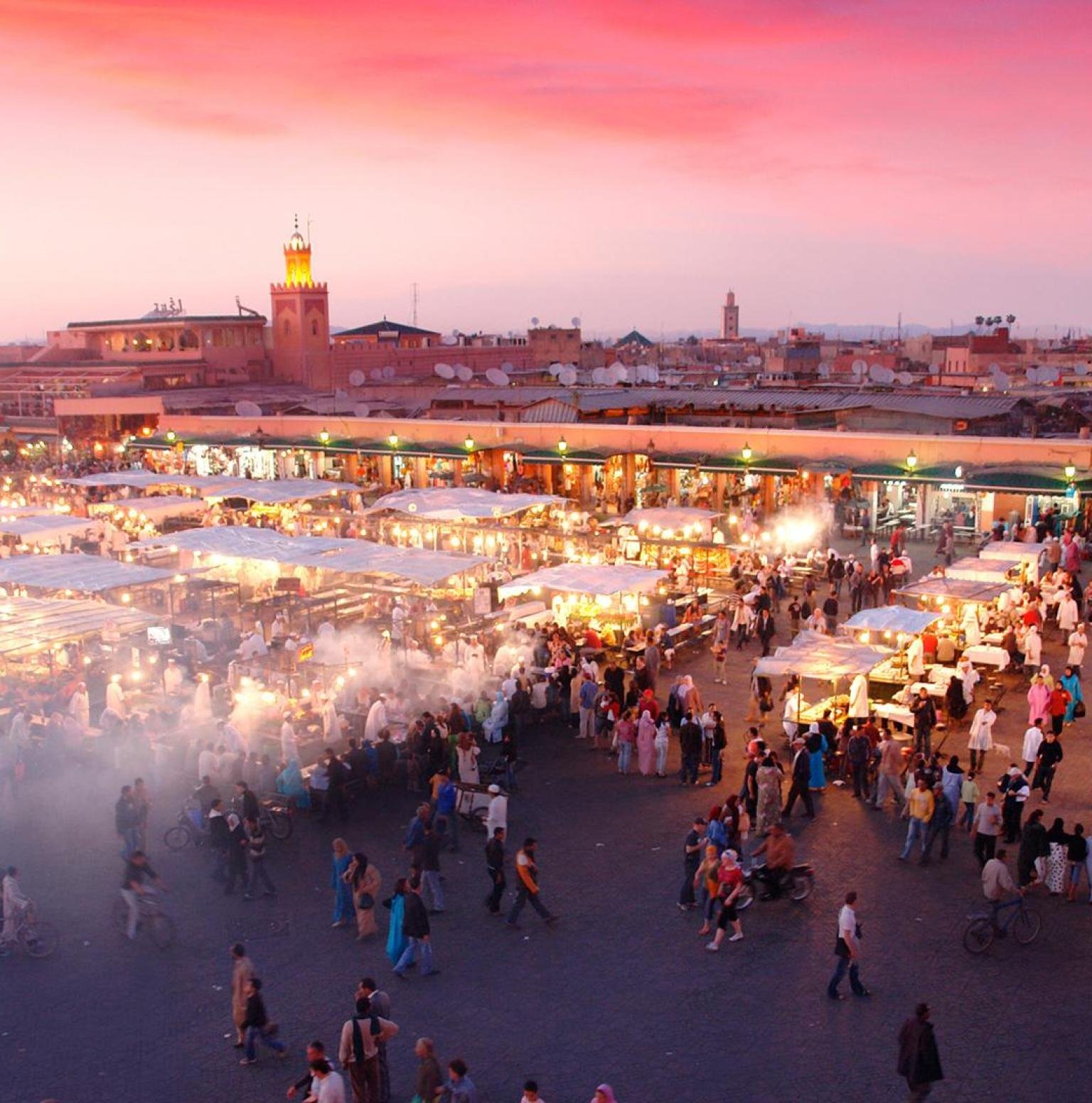
Quick Answer: Ways to Travel From Marrakech to Merzouga
| Option | Approx. time | Comfort | Flexibility | Best for |
|---|---|---|---|---|
| Guided tour, 3 days (shared) | 3 days with stops | Good | Fixed schedule | Solo travellers, budget |
| Guided tour, 3 to 4 days (private) | 3 to 4 days | Very good | High | Couples, families, friends |
| Private driver transfer only | 10 to 12 hours | Good | High | Travellers with their own plans |
| Rental car, self-drive | 10 to 14 hours with breaks | Depends on you | Highest | Experienced road-trippers |
| Public bus | 12 hours or more | Basic | Low | Tight budgets, patient travellers |
| 2 day tour | 2 long days | Tiring | Low | Very short schedules only |
Times are approximate. The road distance is about 560 km, which is roughly 9 to 10 hours of pure driving, and more with stops. See how far Merzouga is from Marrakech and Marrakech to Merzouga distance for the route in detail.
Understanding the Journey Before You Choose
Before comparing options, it helps to understand what the journey is. Merzouga sits at the edge of the Erg Chebbi dunes in the far south-east of Morocco, close to the Algerian border. There is no motorway the whole way. The route leaves Marrakech, climbs the High Atlas by the Tizi n’Tichka pass, descends to Aït Benhaddou and Ouarzazate, follows the Dadès valley and the Todra gorge to Tinghir, then runs east across a dry plain through Erfoud to Merzouga. Mountain bends, small towns, police checks, road works and slow trucks all add time. In winter, fog or snow can slow the pass. In summer, the heat tires drivers and passengers.
This is why the journey itself is part of the trip. Done well, it is a highlight, with some of the most beautiful scenery in Morocco. Done badly, it is a long, uncomfortable day in a vehicle. The best way to travel is the one that fits your time, budget, group and tolerance for long drives.

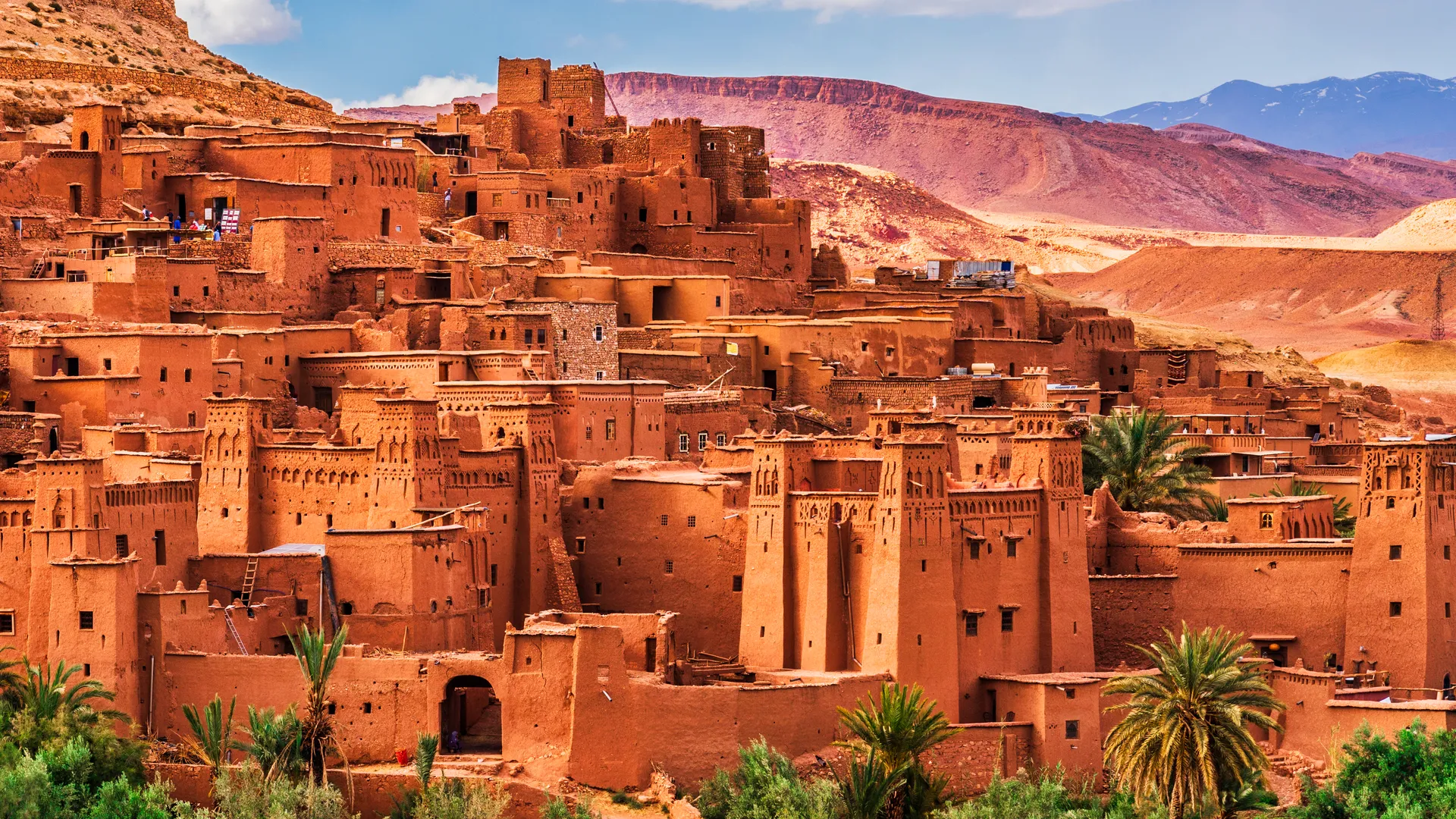
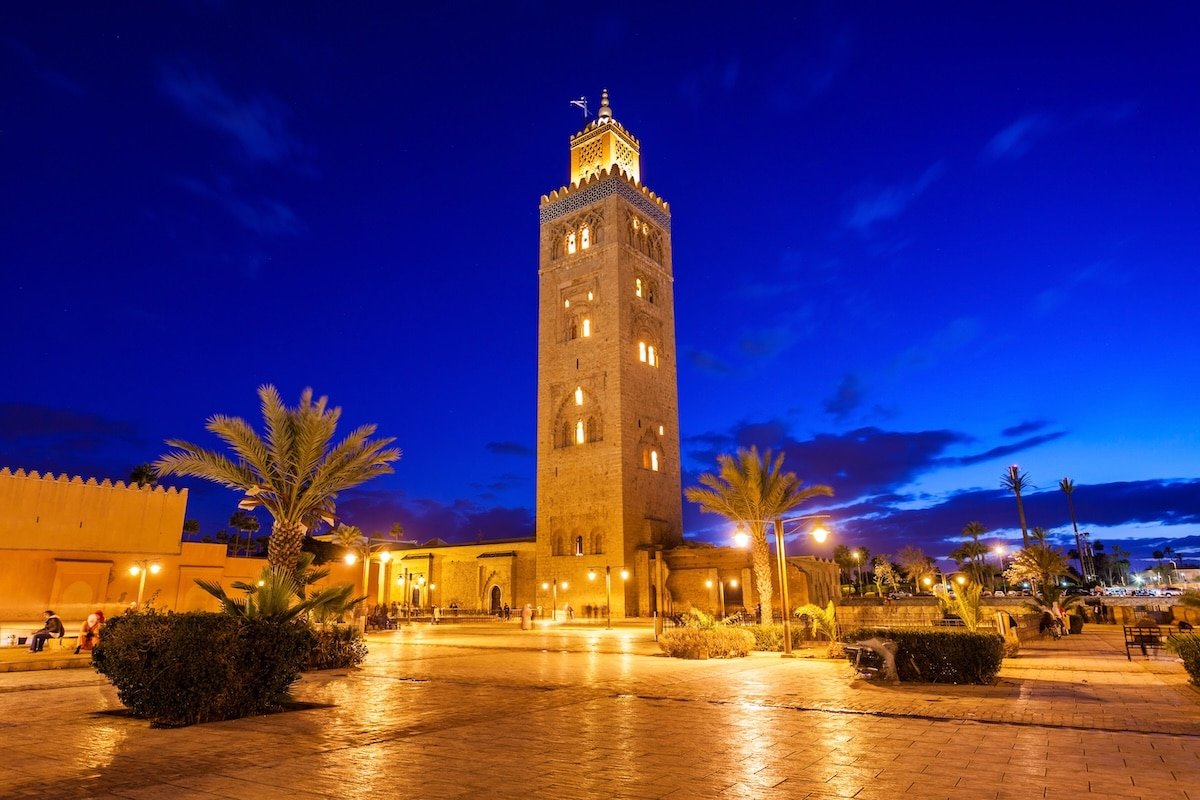
Option 1: A Guided Tour (Our Top Recommendation)
A guided tour combines transport, hotel, camp, camel ride and the stops into one plan. A driver-guide handles the road, you handle the enjoyment. It is the best way for most visitors for several reasons.
- No driving stress. Mountain bends, trucks and police checks are the driver’s job.
- Stops built in. You see Aït Benhaddou, Ouarzazate, Dadès and Todra instead of just passing them.
- Timing for sunset. The plan is built so you reach the dunes in good light.
- Everything arranged. Hotel night, camp, dinner, music and camel ride are organised.
- Local knowledge. A guide explains places, recommends food and helps with small problems.
Shared tour
You travel with other guests in a minibus or similar vehicle. It is the cheapest tour format and a good way to meet people. The schedule is fixed. Read the shared 3 days desert tour from Marrakech for the day by day plan.
Private tour
The vehicle, driver and schedule belong only to your group. You choose when to leave, where to stop and how long to stay. It costs more per person for two travellers but is often excellent value for three or four people. See Marrakech to Merzouga tour for formats and routes.
How many days is best?
Three days is the best balance. Two days is possible but exhausting, and four days is relaxed. Compare them in Merzouga desert tour from Marrakech, read the 2 day tour guide and see the 4-day Marrakech desert tour.

Option 2: Private Driver Transfer
A private transfer takes you from Marrakech to Merzouga in a vehicle with a driver, without a guided programme. It is useful if you have already organised your hotels and camp, if you are continuing on to another city, or if you want a faster trip with only a few stops.
Pros
- Door to door, with no need to share a vehicle.
- Flexible departure time and stops.
- A professional driver who knows the road.
- Good for families with luggage.
Cons
- It is a long day of 10 to 12 hours in one go.
- You miss the guiding, planning and the hotel night on the way.
- It costs more per person than a shared tour for one or two travellers.
If you choose a transfer, we recommend splitting it with a night on the way, for example in Ouarzazate or the Dadès valley, rather than driving everything in one day.
Option 3: Rental Car and Self-Drive
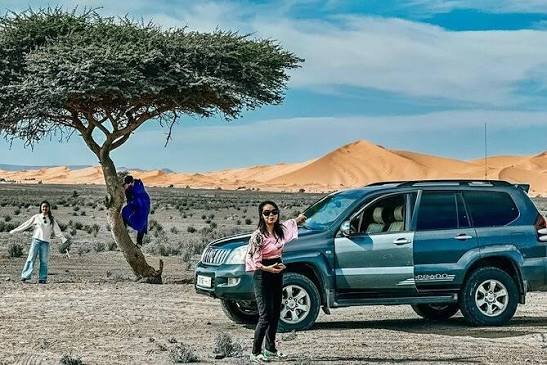
Renting a car gives complete freedom. You choose the pace, the stops, the music and the hotels. It suits confident drivers who enjoy road trips and want to explore side valleys such as Skoura or the Dadès gorge at their own pace. Read car rental in Morocco before you decide.
What to know before self-driving
- The pass has many bends, and heavy trucks and buses drive fast. Overtaking requires care.
- Police checkpoints are frequent. Keep your documents, licence and car papers ready and follow speed limits.
- Fuel stations are less frequent after Ouarzazate, so fill up in larger towns.
- Daylight is limited in winter, and driving at night in the mountains is not recommended.
- Check your insurance and the rental contract, especially for unpaved roads, which are often excluded.
- Parking and the last kilometres to the camps can be rough tracks, and a normal car cannot enter the dunes.
Even with a rental car, many travellers book the camel ride and camp night with a local team and leave the car at the hotel in Merzouga. That is a good compromise.

Option 4: Public Bus
Long-distance buses connect Marrakech with towns in the south-east such as Errachidia and Rissani, with onward local transport to Merzouga. Services and timetables change, so check the current schedules with the bus company or at the station. Buses are the cheapest option but also the slowest, with fixed departure times, a possible change of vehicle, and the need to arrange the last stretch to Merzouga by taxi or a pickup from your camp or hotel.
- Good for: budget travellers with plenty of time and little luggage.
- Not great for: families, people with heavy bags or anyone short of time.
- Tip: book the seat early, travel with water and snacks and arrange your camp pickup in advance.
What About Flying?
Travellers often ask whether they can fly part of the way. Regular domestic flights to the south-east change over time, and there is no large airport right next to Merzouga. If you find a flight to a closer city, compare the total time, including airport transfers and the remaining road, with a direct road tour. Check the latest airline schedules before planning around a flight, and ask us about transfers from the nearest airport or station to Merzouga.
Comparing Cost: What Each Option Roughly Costs
Prices depend on the season, number of travellers, vehicle and what is included, so these are only planning guidelines. A shared 3-day tour costs the least per person among guided options. A private tour costs more per person for two travellers but becomes competitive for groups. A private transfer is a single fixed price split among passengers. A rental car depends on the daily rate, insurance, fuel and tolls. A bus ticket is usually the cheapest cash cost, but you add taxis and lose time. For a fuller breakdown, read how much it costs to visit the desert in Morocco.
Remember that the cheapest ticket is not always the best value. If a bus saves money but costs you an extra day and a taxi, the saving may be small. If a tour includes the hotel night, camp, dinner, breakfast and camel ride, its price covers far more than transport.
Which Way Is Best for Your Type of Traveller?
Solo travellers
A shared 3-day tour is usually the best choice: affordable, safe and sociable. Read solo female travel in Morocco for extra advice.
Couples and honeymooners
A private tour with a comfortable or luxury camp. See best luxury in Merzouga.
Families with children
A private vehicle with flexible stops, a night on the way and a family-friendly camp. Avoid the 2 day format with young children.
Groups of friends
A private minibus or 4×4 split among the group often costs less per person than separate shared tickets, and you control the schedule.
Road-trippers
A rental car, with a camp night booked locally. Prepare well and avoid night driving.
Travellers with very little time
A private transfer or a 2 day tour, accepting the long driving, or a closer desert such as Zagora or Agafay. Read Merzouga or Zagora before you decide.

A Suggested 3 Day Plan: The Best Way in Practice
- Day 1: leave Marrakech early, cross the Atlas, visit Aït Benhaddou, have lunch near Ouarzazate and sleep in the Dadès valley.
- Day 2: visit the Todra gorge and Tinghir, drive to Merzouga, ride a camel at sunset and sleep in the camp.
- Day 3: watch the sunrise, then drive back to Marrakech, or continue to Fes for a loop across Morocco.
For a version based in the desert itself, see Merzouga 3 day tour. If you want to continue to Fes instead of coming back, ask for a one-way plan, which avoids repeating the same road.
Best Time to Make the Journey
Spring and autumn offer the most comfortable temperatures. Winter has short days and a cold Atlas pass, with occasional snow, so leave early and keep a margin. Summer has long days but very high heat, so travel in the morning and rest in the afternoon. Read the best time to go to Merzouga and best time to visit Morocco. Check Ramadan dates in Ramadan in Morocco, because meal stops and opening hours change.
Safety and Comfort on the Road
- Choose experienced drivers and well-maintained vehicles with seat belts.
- Avoid night driving in the mountains.
- Carry water, snacks, sunscreen, a hat and a light jacket.
- Take motion sickness tablets if you are sensitive to bends.
- Keep valuables with you, and share your itinerary with someone you trust.
- Have travel insurance that covers road trips and activities.
For general safety information, read is it safe to visit Morocco. Check entry rules in Morocco visa and money tips in the dirham currency guide.
What to Pack for the Journey
- A small overnight bag for the camp and a larger bag that stays in the vehicle or hotel.
- A scarf, sunglasses and sunscreen.
- A warm layer for the desert night, especially in winter.
- Comfortable shoes and a reusable water bottle.
- A charger, power bank and offline music or maps.
- Some cash, because cards are not accepted everywhere.
For clothing details by season, read what to wear in Merzouga.
Common Mistakes When Planning the Journey
- Underestimating the distance, because Morocco looks small on a map.
- Trying to do everything in one day.
- Booking a flight or train for the evening you return.
- Not confirming pickup time, place and arrival time at the dunes.
- Choosing only by price, without checking the camp, group size or driver.
- Carrying too much luggage into the camp.
To avoid weak offers, read how to choose a reliable Morocco travel agency and, if you are comparing platforms, booking online vs a local Merzouga guide.
What to Do When You Arrive in Merzouga
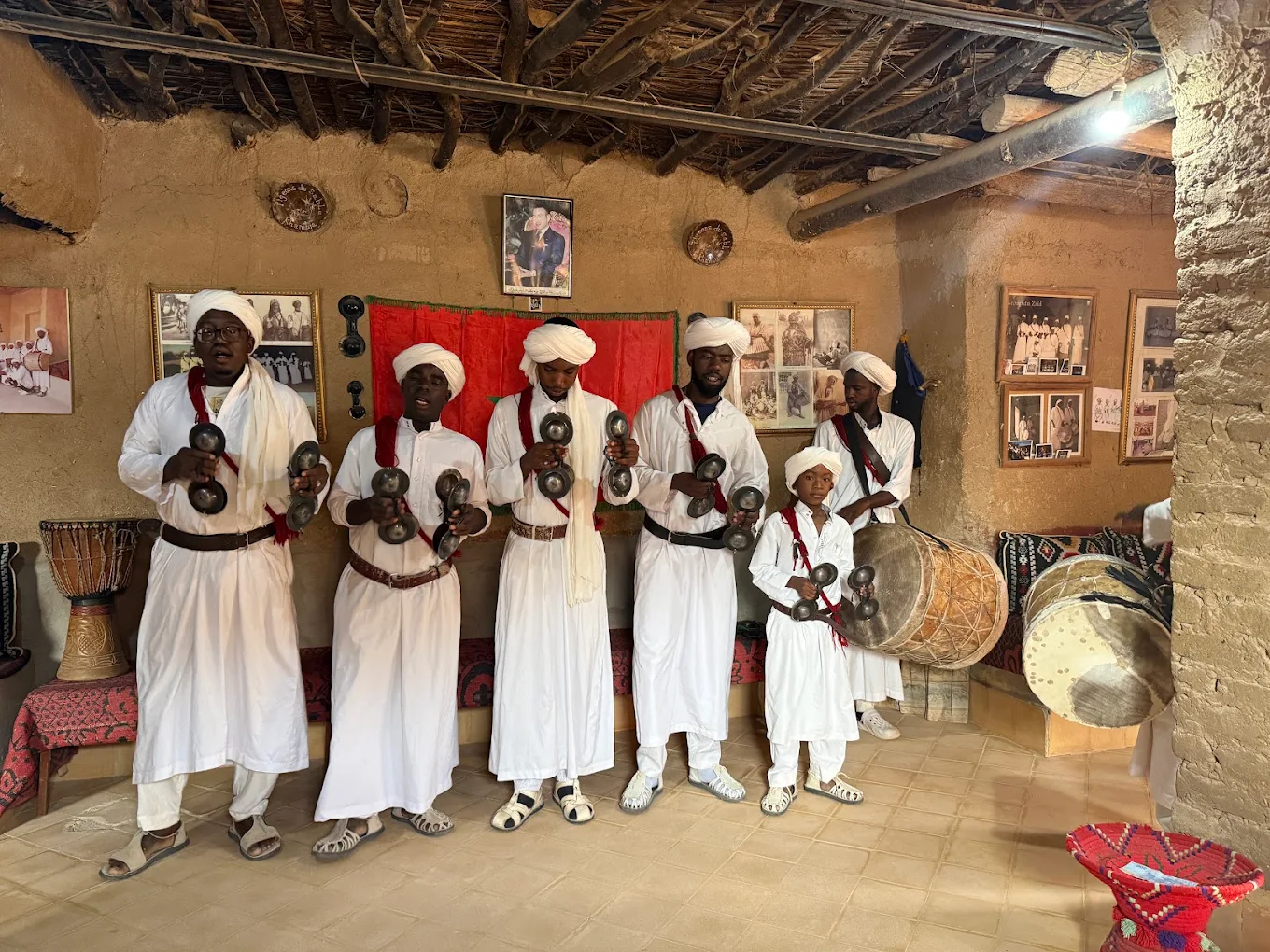
Once you arrive, the real experience begins. A camel ride takes you into the dunes for sunset, followed by dinner, music and a night under the stars. The next morning you watch the sunrise. With an extra day you can add quad bikes and buggy rides, sandboarding, a 4×4 excursion to nomad families, Khamlia village with Gnawa music and a visit to Rissani market. See Merzouga activities, quad bikes and buggy in Merzouga and where to stay in Merzouga.


Our Honest Verdict
If you want a simple answer: book a private or small-group 3-day tour with a driver-guide, a hotel night on the way and a comfortable camp. It gives the best mix of scenery, comfort, safety and value, and it turns the long road into one of the best parts of the trip. Choose a rental car if you love driving and have time, a private transfer if you already have a plan, a bus only if your budget is very tight, and a 2-day trip only if you truly have no other option. If you are not sure, tell us your dates, group and budget and we will recommend the right way, even if that means a different plan than the one we sell.
Frequently Asked Questions
What is the best way to travel from Marrakech to Merzouga?
A 3-day guided tour with an experienced driver-guide, a hotel night on the way and a desert camp, either shared or private.
How long does it take to get from Marrakech to Merzouga?
About 9 to 10 hours of driving without stops, and 12 hours or more with breaks, which is why a night on the way is recommended.
Can I drive myself from Marrakech to Merzouga?
Yes, if you are a confident driver. Avoid night driving, check your insurance and plan fuel stops.
Is there a direct bus?
Bus services connect Marrakech with towns in the south-east, usually with a change or onward transport to Merzouga. Check current timetables before you plan.
Is a private transfer better than a tour?
A transfer is faster and simpler, but a tour adds the stops, hotel and camp planning, and usually better value overall.
Can I finish in Fes instead of returning to Marrakech?
Yes. A one-way tour from Marrakech to Merzouga and on to Fes avoids repeating the road.
When should I leave Marrakech?
Early in the morning, ideally before 8 am, to arrive with enough daylight.
Plan Your Journey With Us
Tell us your dates, group size, comfort level and whether you want to return to Marrakech or continue to Fes, and we will propose the best way to travel with a clear written plan and price. See our Merzouga desert excursions, Merzouga tours and Morocco tour packages, or book your Merzouga tour. For background on the area, see Merzouga on Wikipedia.
Message us on WhatsApp at +212 620 628 083 or use our contact page.