Marrakech City Morocco: Where It Is, What It Is Like and How to Plan Your Visit
Marrakech city Morocco is one of the best-known destinations in North Africa, a red-walled city at the foot of the High Atlas mountains that mixes ancient markets, palaces, gardens and a modern new town. This guide answers the basic questions travellers ask about Marrakech city Morocco: where it is, how big it is, what the different districts are like, what the weather is like, how to get there and around, how many days to stay and what to do beyond the city. Figures such as distances, population and temperatures are approximate and can change, so check current information before you travel. We do not quote fixed prices.
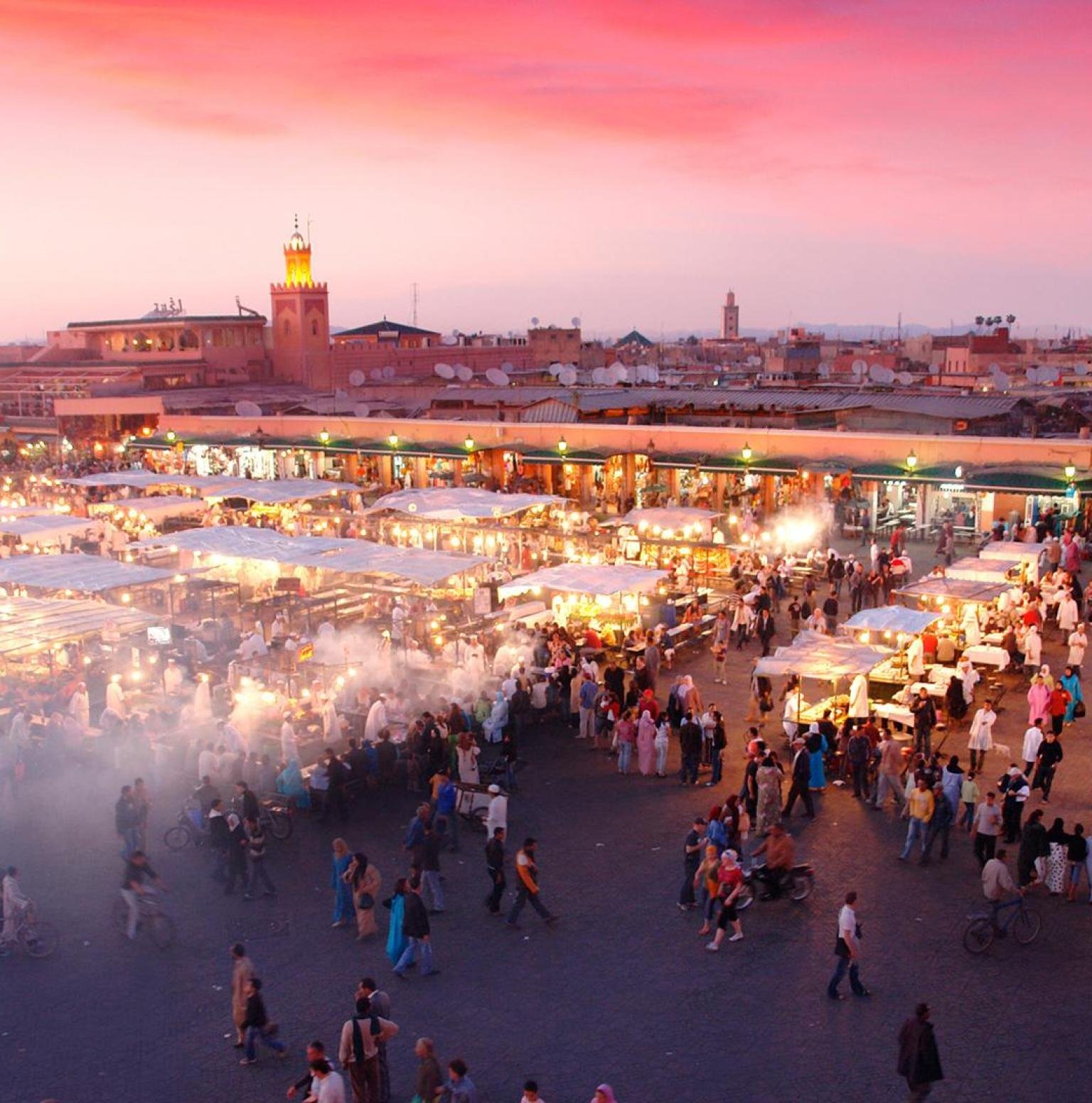
Marrakech city Morocco at a glance
- Country: Morocco, in North Africa.
- Location: inland in the south-west of the country, on a plain below the High Atlas mountains.
- Nickname: the Red City, from the colour of its earthen walls and buildings.
- Status: one of Morocco’s four imperial cities, with Fes, Meknes and Rabat.
- Best known for: the medina, Jemaa el-Fna square, the souks, palaces, gardens and desert and mountain trips.
- Language: Arabic and Amazigh are official languages. French is widely spoken, and English is common in tourism.
- Best seasons: spring and autumn.
For a general overview of the city’s name and background, see the Wikipedia article on Marrakesh.
Where is Marrakech city in Morocco?
Marrakech lies in the interior of western Morocco, about 240 km south of Casablanca by road, with the snow-capped High Atlas mountains visible to the south on clear days. It is not on the coast: the nearest Atlantic beaches, such as Essaouira, are a few hours away. To place the city within the country, read where is Morocco: location, map and neighbours.
- From Casablanca: roughly 240 km, a few hours by train or road.
- From Essaouira: roughly 180 km west, a little over two hours by road.
- From Ouarzazate: across the High Atlas via the Tizi n’Tichka pass.
- From Fes: a long journey, usually broken up with a stop or done by train via Casablanca.
- From Merzouga: a very long journey, so plan at least a day or more. See Marrakech to Merzouga: distance, route, time and best stops.
These distances are approximate. Journey times depend on traffic, road works and the weather, especially in the mountains.
How big is Marrakech?
Marrakech is one of Morocco’s largest cities, with a population often described as around a million people in the city and more in the wider urban area. The exact figure depends on how the city boundary is defined and on the source, so use it as a rough idea only. The walled medina is the historic heart and is easy to cross on foot, while the modern districts spread out beyond it.
The districts of Marrakech city
Understanding the layout makes it easier to choose where to stay and how to plan your days.
The Medina
The old walled city, with narrow lanes, souks, mosques, palaces and riads. It is the most atmospheric area and the place where most visitors want to be. It can be noisy and busy, and finding your way takes a little practice. For the markets, see our Marrakech souks guide.

Jemaa el-Fna and the Koutoubia area
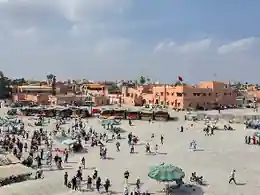
The main square and the landmark minaret of the Koutoubia mark the centre of the old city. The square is quiet in the morning and lively in the late afternoon and evening, with food stalls, musicians and storytellers.
Gueliz (the New Town)
Built in the 20th century, Gueliz has wide avenues, modern cafes, restaurants, shops and galleries. It feels more European and is a good base for travellers who prefer a calmer area with easy taxi access.
Hivernage
A leafy district known for hotels, bars, restaurants and nightlife, between the medina and the new town. It is a convenient location for comfortable stays.
The Palmeraie
A large palm grove on the northern edge of the city with resorts, villas and quiet guesthouses. It is a good option if you want space, gardens and a pool, but you will need transport to reach the centre.
Kasbah and the Mellah
The southern part of the medina has the historic Kasbah district with royal and Saadian sites, and the old Jewish quarter, the Mellah. These areas have palaces, tombs and local markets, and are generally calmer than the central souks.
What is the weather like in Marrakech?
Marrakech has a semi-arid climate, with hot summers, mild winters and little rain overall. Nights can feel cool in winter even when days are sunny.
- Spring (March to May): warm, pleasant and green after the winter rains. One of the best times to visit.
- Summer (June to August): very hot, especially in the afternoon. Plan sightseeing early and late.
- Autumn (September to November): warm days and cooler evenings. Another very good time to visit.
- Winter (December to February): mild days, cold nights and occasional rain. The Atlas mountains may have snow.
Weather varies from year to year, so check a forecast before you go. For packing ideas that also work for hot, sunny days, see what to wear: packing guide for every season.
How to get to Marrakech city
- By air: Marrakech has an international airport with flights from many European cities and connections through other Moroccan airports. Routes and airlines change, so check current options.
- By train: trains connect Marrakech with Casablanca, Rabat and Tangier, among others. Check timetables with the rail operator.
- By road: motorways link Marrakech with Casablanca and other northern cities. Roads to the south cross the High Atlas.
- By bus: long-distance buses connect Marrakech with most Moroccan cities.
For visas and entry rules, read Morocco visa and always check official sources for your nationality. If you plan to drive, see car rental in Morocco.
How to get around Marrakech city
- On foot: the best way to explore the medina. Wear comfortable shoes.
- Petit taxis: small city taxis for short trips. Agree the fare or ask for the meter before you go.
- Grand taxis and private drivers: useful for longer trips and groups.
- Calèches: horse-drawn carriages for sightseeing. Agree the price and route in advance, and consider the welfare of the animals.
- Buses: public buses serve the city, though most visitors rely on taxis.
- Bicycles and scooters: possible outside the medina, but traffic can be intense.
For practical advice on money, safety, transport and etiquette, read our Marrakech travel tips.
The main sights in Marrakech city Morocco
- Jemaa el-Fna: the central square, best at sunset and in the evening.
- Koutoubia Mosque: the minaret that is the symbol of the city. Non-Muslims cannot enter, but can see it from outside.
- The souks: covered markets with crafts, spices, leather and lanterns.
- Bahia Palace: a 19th century palace with painted ceilings and courtyards.
- El Badi Palace: atmospheric ruins of a Saadian palace.
- Saadian Tombs: royal tombs known for their decoration.
- Ben Youssef Madrasa: a former Islamic school, if open.
- Majorelle Garden: a colourful garden created in the 20th century.
- Menara Gardens: olive groves and a large basin with views of the Atlas on clear days.
For details and more ideas, read Marrakech attractions and activities and the Marrakech travel guide. To understand the story behind these landmarks, read Marrakech history.
How many days do you need in Marrakech?
- 1 day: the square, the souks and one palace. A quick taste.
- 2 days: add more palaces, gardens and a slow evening in the square.
- 3 days: time for the main sights, a day trip and relaxing breaks.
- 4 to 5 days: a comfortable pace with a mountain or desert excursion.
Most travellers find that two to three days in the city, plus one or two days on trips, is a good balance.
Day trips from Marrakech city

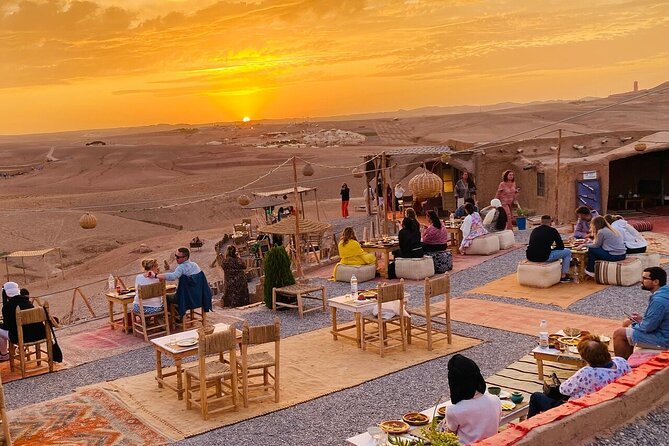

- Agafay desert: a rocky desert close to the city, popular for sunset, camps and activities. Read the Agafay desert guide.
- Atlas Mountains and Berber villages: hiking, valleys and local culture.
- Essaouira: a relaxed Atlantic coast town.
- Ouzoud Falls: waterfalls in the Middle Atlas, a long day trip.
- Ait Ben Haddou and Ouarzazate: kasbahs and film-set landscapes across the High Atlas. See what to see in Ouarzazate.
From Marrakech city to the Sahara
Many travellers use Marrakech as the start of a desert trip to Merzouga. The journey is long and crosses the High Atlas, so most tours take at least three days. Read best desert tour from Marrakech, the shared 3-day tour and whether a 2-day tour is worth it. To compare ways of travelling, see independent travel or organised tour.
Is Marrakech safe and easy for visitors?
Millions of travellers visit Marrakech city Morocco without problems. As in any busy tourist city, use common sense: watch for pickpockets in crowds, agree taxi fares in advance, avoid unofficial guides who ask for money and keep valuables secure. Dress modestly, especially near religious sites, and ask before photographing people. For an honest overview read is it safe to visit Morocco, and for women travelling alone, Morocco solo female travel. For languages, see what languages are spoken in Morocco.
Marrakech city Morocco: frequently asked questions
Where is Marrakech in Morocco?
It is in the interior of western Morocco, on a plain at the foot of the High Atlas mountains, about 240 km south of Casablanca.
Is Marrakech the capital of Morocco?
No. The capital is Rabat. Marrakech is one of the four imperial cities and a major tourist destination.
Why is Marrakech called the Red City?
Because its walls and many buildings are made of reddish earth, which glows at sunset.
How many days should I spend in Marrakech?
Two to three days for the city, plus extra days if you want day trips or a desert tour.
What is the best time to visit?
Spring and autumn are usually the most comfortable. Summer is very hot.
Where should I stay in Marrakech?
The medina for atmosphere, Gueliz or Hivernage for convenience and modern hotels, and the Palmeraie for quiet and pools.
Is Marrakech expensive?
Costs vary widely, from budget guesthouses to luxury hotels. Compare options and check current rates directly.
Can I visit the desert from Marrakech?
Yes. The Agafay desert is close for a short trip, and the Sahara dunes at Merzouga need a multi-day tour.
Do I need a visa for Morocco?
It depends on your nationality. Check official sources and read our Morocco visa guide.
What currency is used?
The Moroccan dirham. Carry some cash for taxis, markets and small purchases. See the Wikipedia page on the dirham.
Is Marrakech good for families?
Many families enjoy it, with preparation for heat and crowds. See Morocco 10 days itinerary with kids for ideas.
Plan your trip beyond Marrakech city
If you want to continue from Marrakech to the dunes, a camel ride and a night in a desert camp, we can help you plan the route and the nights. Message us on WhatsApp at +212 620 628 083 or use the contact page. For the desert side of your trip, see the Merzouga desert complete guide.