Why Is Chefchaouen Blue? The Story, the Best Photo Spots and Tips for Visiting the Blue City
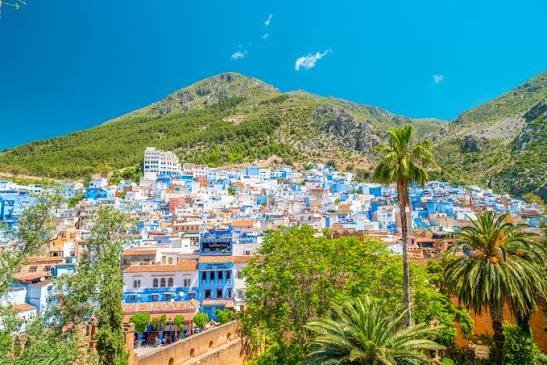
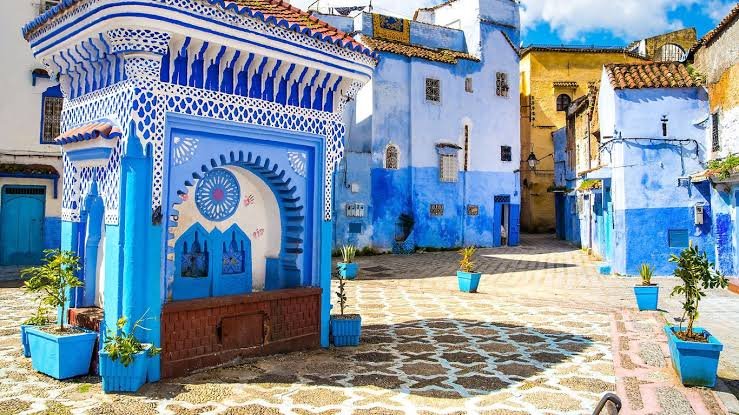
Why is Chefchaouen blue? It is the first question almost every visitor asks when they see the town’s walls, doors and staircases painted in shades of sky blue and indigo.
The honest answer is that no single explanation is universally accepted. This guide walks through the most common theories, the history behind them, the best places to take photos and how to visit the blue city in a respectful and relaxed way.
If you want a complete visitor overview with things to do, itineraries and transport, read our main Chefchaouen blue city travel guide. This article focuses on the story of the colour and on photography.
Table of Contents
Why Is Chefchaouen Blue? A Quick Answer
| Theory | The idea | How certain is it? |
|---|---|---|
| Jewish heritage | Families who settled in the town brought a tradition of painting with blue, linked to spiritual meaning | Widely told, but historians do not all agree on the details |
| Spiritual symbolism | Blue stands for the sky and heaven | A popular reading, hard to prove |
| Practical reasons | Blue paint may keep houses cooler and discourage insects | Often repeated, with no firm evidence |
| Tourism | The colour is renewed today because visitors love it | Clearly true for modern upkeep |
In short: the blue has deep roots in local tradition, but the exact reason is a mix of stories. What is certain is that the colour is kept alive today by residents and by the town’s popularity.
The Main Theories Behind the Blue
Theory 1: A tradition brought by Jewish families
The most common story says that Jewish families who settled in Chefchaouen over the centuries painted their homes blue. In Jewish tradition, a blue-purple dye is associated with the sky and with remembering the divine, and this symbolism is often given as the reason.
Many local guides tell this story, but historians say the timeline is unclear, and some believe the town was only fully painted blue in recent decades. Treat it as an important local tradition rather than a settled fact.
Theory 2: Heaven and spirituality
Another explanation links blue to the sky and to spiritual reminders. Under this idea, living in a blue town encourages people to think of heaven and keep a peaceful mindset. It matches the calm mood that visitors often feel here.
Theory 3: Keeping houses cool and insects away
Some people say the paint, often mixed with lime, helps keep homes cool in summer and discourages mosquitoes. This sounds plausible, and lime wash is a traditional building material in many warm regions, but there is no clear proof that insect control was the original reason.
Theory 4: A colour that attracts visitors
Today, the blue is also an economic asset. Residents repaint walls and steps regularly, and shops and guesthouses use the colour as part of their identity. Whatever its origin, the blue now supports a thriving local tourism economy.

A Short History of the Blue City
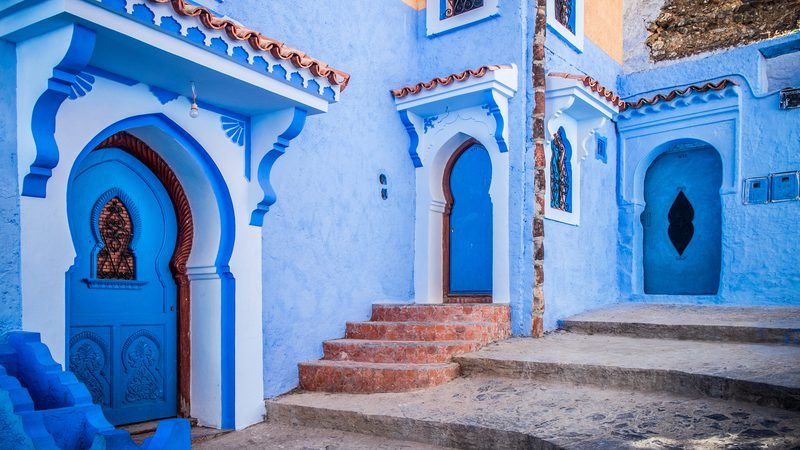
Chefchaouen was founded in the fifteenth century as a fortified settlement in the Rif Mountains. Its early growth is linked to people arriving from Andalusia in southern Spain, and that heritage is visible in the arched doors, tiled roofs and small courtyards.
The mountain location kept the town relatively isolated for a long time, and it was under Spanish influence during the protectorate period in the twentieth century. This is one reason Spanish is still widely understood in the north of Morocco.
Understanding this mixed history helps explain why the town feels different from the imperial cities of the south, and why the colour carries so many layers of meaning.
Is the Whole Town Really Blue?
Not quite. The blue is concentrated in the old medina, where walls, stairs and doors are painted in many shades. Outside the old town, buildings are mostly white, beige or other colours, as in many Moroccan towns.
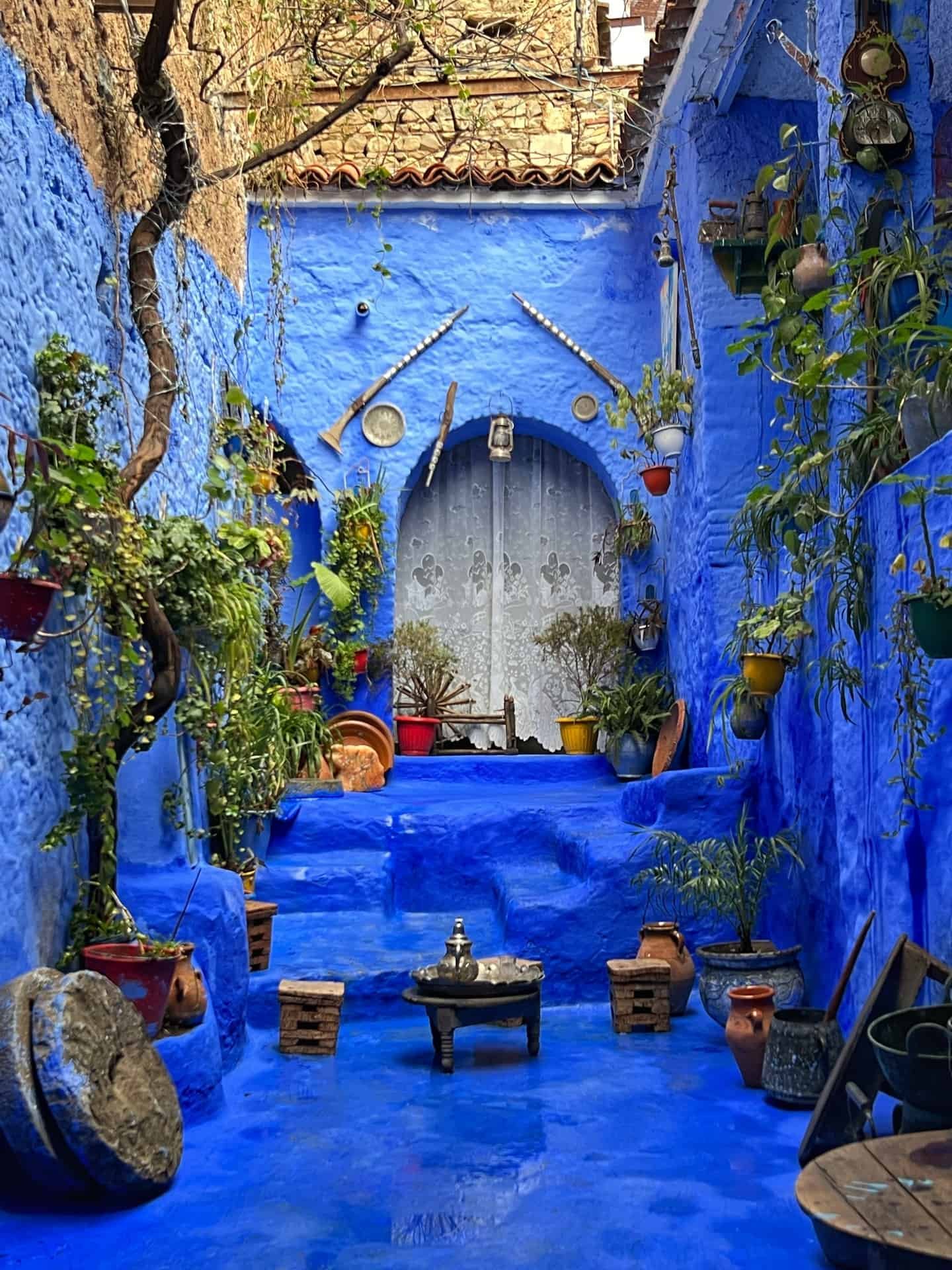
Even inside the medina the blue varies, from pale sky blue to turquoise and deeper indigo, and some doors and details use other colours. Light changes through the day, so the same lane can look very different in morning and evening.
The Best Photo Spots in Chefchaouen
- The medina lanes: narrow blue staircases and doorways, best in early morning when few people are out.
- Plaza Uta el-Hammam: the main square with the kasbah and mosque, good for evening atmosphere.
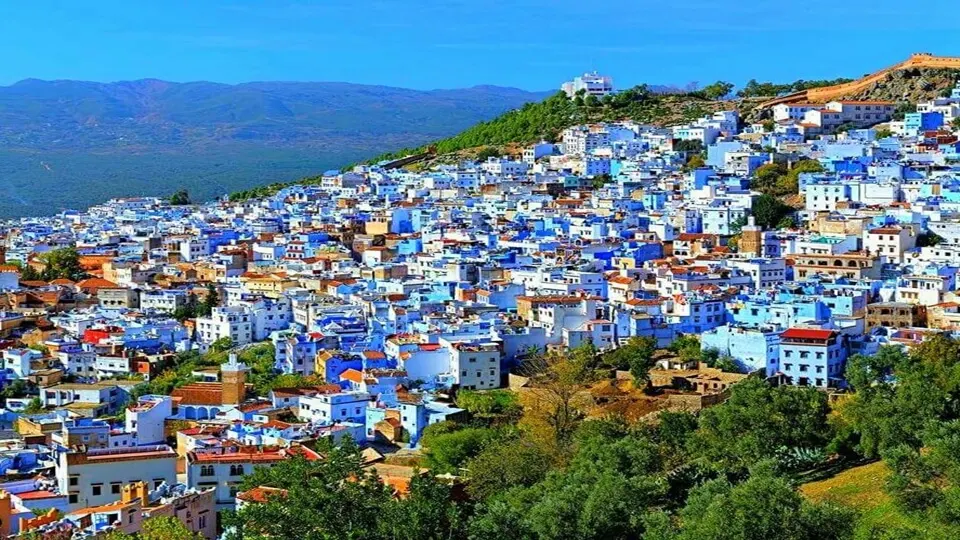
- The Spanish Mosque viewpoint: a hill above town with a wide view of the blue rooftops, popular at sunset.
- Ras el-Maa: the spring and waterfall area at the edge of the medina.
- Rooftop terraces: many cafés and guesthouses offer views over the medina and mountains.


Photography Tips for the Blue City
- Arrive early or stay overnight to photograph quiet lanes before day-trippers arrive.
- Use soft morning or late afternoon light, since midday sun can wash out the blues.
- Look for details such as doors, plant pots, tiles and window frames, not only wide views.
- Do not block narrow lanes or stand on steps leading to private homes.
- Wear comfortable shoes, because lanes are steep and often uneven.
Best Time to See the Blue City
Spring and autumn are generally the most comfortable seasons, with clear light and pleasant temperatures. Summer is warmer and busier, and winter can bring rain and cloud, which some photographers enjoy for the moody sky.
Whatever the season, the best light is at the beginning and end of the day. If you can, spend a night in town rather than rushing through on a short stop.
Visiting Respectfully
Chefchaouen is a living town, not an open-air studio. Residents live behind those blue doors, so a few good habits make a difference.
- Ask permission before photographing people, and accept a polite no.
- Keep your voice down in residential lanes, especially early and late.
- Dress modestly, with shoulders and knees covered.
- Buy crafts and food from local shops to support the community.
- Politely decline offers of illegal drugs, which are not legal for tourists even though the region is known for cannabis.
For wider advice, read our Morocco travel safety guide and check entry rules in the Morocco visa guide.
Other Things to See Besides the Blue Walls
The colour is only part of the appeal. The old kasbah and its garden, local craft shops with woven blankets, terrace restaurants serving goat cheese and tagines, and walks into the hills all add depth to the visit.
A short drive away, the Akchour area is known for river pools, waterfalls and hiking. For the full list of activities, an itinerary and transport options, see our complete Chefchaouen guide.

How to Fit Chefchaouen Into a Morocco Trip
Chefchaouen sits in the north, so it fits naturally with Tangier, Fes, Meknes and Rabat. Many travelers continue from the blue city to Fes and then south towards the Sahara.
To place it on a wider route, see our Morocco travel destinations overview. If you continue to the desert, read about one night in Merzouga or plan 2 nights in Merzouga, and browse our desert camps.


Why Is Chefchaouen Blue: Frequently Asked Questions
Why is Chefchaouen blue?
There is no single accepted reason. Common explanations include a tradition brought by Jewish families, spiritual symbolism of the sky, keeping houses cool and discouraging insects, and today’s tourism appeal.
When did Chefchaouen become blue?
Accounts differ. Some say the tradition is old, while others believe the town was widely painted blue more recently. Treat any exact date with caution.
Is all of Chefchaouen blue?
No. The blue is mostly in the old medina. Newer areas outside the old town use other colours.
Is Chefchaouen worth visiting?
For most travelers yes, especially if you enjoy photography, slow walks and mountain scenery. Allow at least one full day, and ideally a night.
What is the best time to photograph the blue city?
Early morning and late afternoon, when the light is soft and the lanes are quieter. Spring and autumn are the most comfortable seasons.
Can I photograph people in Chefchaouen?
Always ask first. Some people will agree, some may ask for a tip and some will decline, and you should respect their answer.
How long should I stay in Chefchaouen?
One full day is the minimum, and two nights is more relaxed. See the main guide for a one-day itinerary.
Can I combine Chefchaouen with the Sahara?
Yes. Many travelers combine the north, Fes and the Merzouga dunes in a 10 to 14 day trip, so plan enough days for the long distances.
Plan Your Morocco Trip With Local Experts
Want to see the blue city and then continue to the Sahara? Tell us your dates and how many days you have, and we will suggest a realistic route.
Message us on WhatsApp at +212 620 628 083, see how to book a Merzouga tour, or use the contact page. For general travel information you can also visit Visit Morocco.