Camel Trekking in Merzouga and a Night in a Luxury Camp: The Complete Sahara Guide

Few travel experiences feel as timeless as camel trekking in Merzouga at golden hour, riding into the Sahara as the light turns gold. When you finish that ride at a comfortable luxury camp, with a real bed, a hot dinner and a sky full of stars, it becomes one of the best nights of a Morocco trip.
This guide explains camel trekking in Merzouga step by step, from the moment you climb onto the camel to the sunrise the next morning. You will also learn what a luxury camp really offers, how it differs from a standard camp, what to wear, how to choose well and what affects the price.
New to the area? Start with our overview of what to do in Merzouga, or read the hour-by-hour story of one night in Merzouga. This article goes deeper on the camel ride and the luxury stay.
Table of Contents
Camel Trekking in Merzouga at a Glance
| Topic | Quick answer |
|---|---|
| Where | Erg Chebbi dunes near Merzouga, southeast Morocco |
| Typical camel ride | About 1 to 2 hours each way, depending on the camp |
| Best time of day | Late afternoon for sunset; early morning for sunrise |
| Best seasons | March to May and September to November |
| Luxury camp stay | Private tent, real bed, often private bathroom, dinner and breakfast |
| Experience needed | None; guides lead the camels |
| Recommended stay | 1 night minimum; 2 nights for a more relaxed visit |
| What to bring | Light layers, scarf, closed shoes, sunscreen, small day bag |
What Is Camel Trekking in Merzouga?
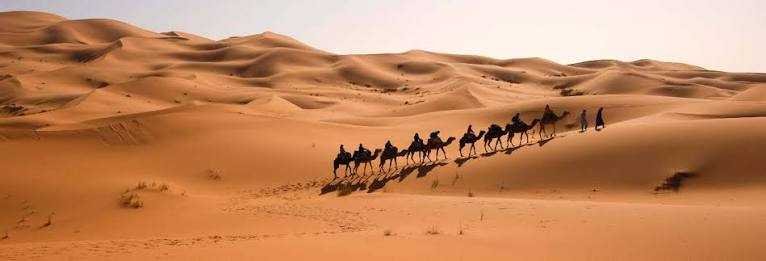
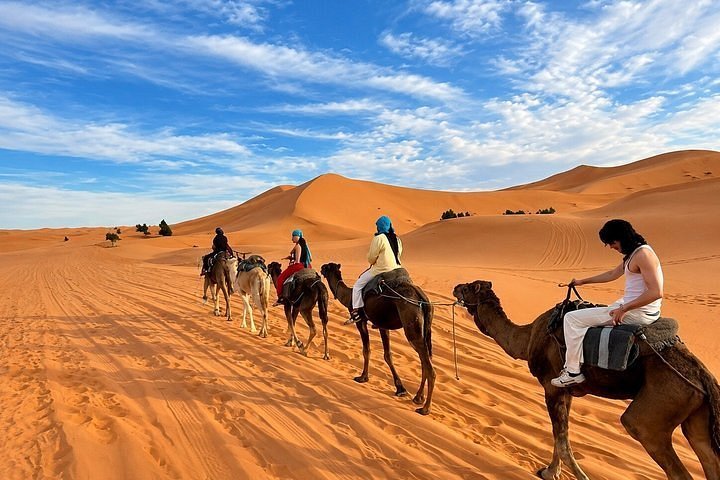
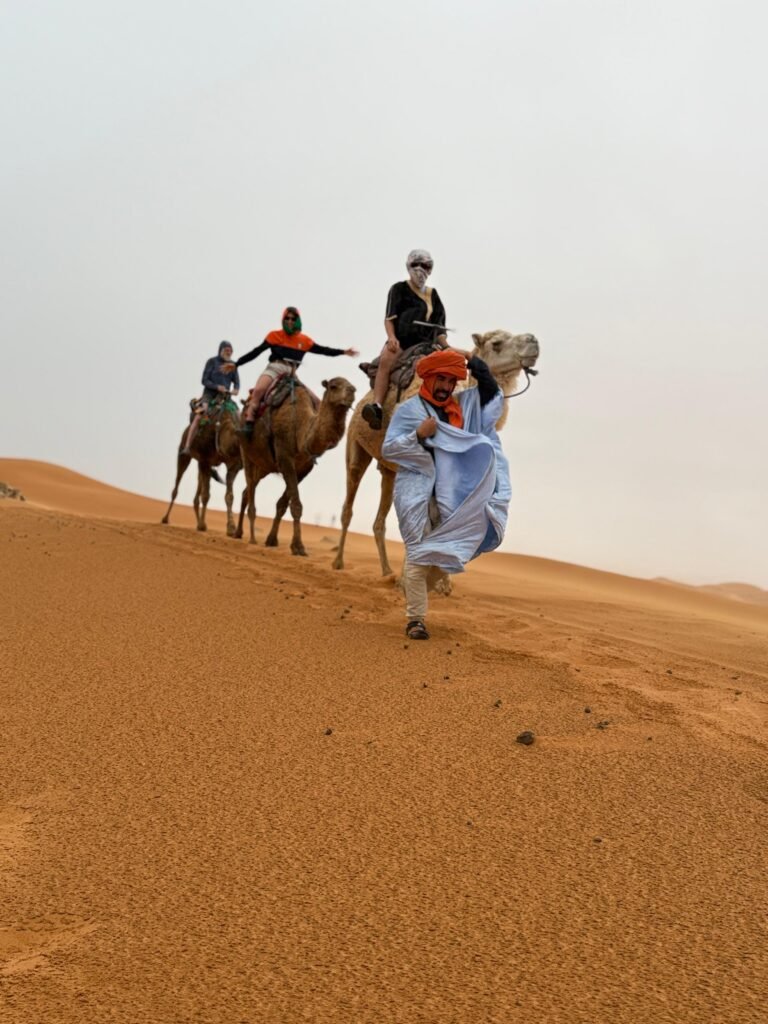
Camel trekking in Merzouga means riding a dromedary (a one-humped camel) through the sand dunes of Erg Chebbi, usually in a small caravan led on foot by a local guide. You sit on a padded saddle, hold a handle at the front and let the camel set a slow, swaying pace.
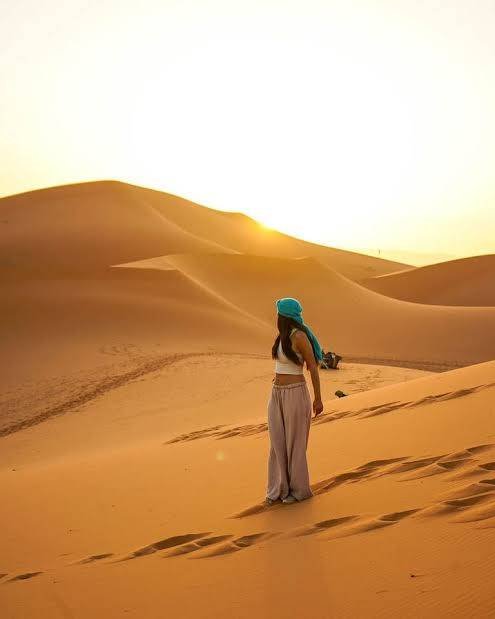
The dunes here are among the highest in Morocco, rising to roughly 150 metres, and they change colour from pale gold to deep orange through the day. The caravan crosses them at sunset, then reaches a camp placed deep in the sand, away from the village lights. Because camels have been used in the Sahara for centuries, camel trekking in Merzouga feels natural and surprisingly calm.

Why Combine a Camel Trek With a Luxury Camp?
Camel trekking in Merzouga on its own is a short, lovely activity. Pairing it with an overnight stay turns it into a full Sahara experience, because you see the dunes at their best light, hear the silence after dark and wake up to sunrise without any rush.
A luxury camp adds comfort to camel trekking in Merzouga. After a day of travel, many guests are glad to have a proper bed, clean sheets, a private bathroom and a warm shower rather than a shared mattress in a simple tent. It keeps the atmosphere of the desert while removing most of the hardships, which suits couples, families, honeymooners and anyone who wants rest as well as adventure.
- Comfort: real beds, bedding and often private bathrooms.
- Better rest: thick tents, heating in winter and quiet surroundings.
- Privacy: your own tent or suite rather than a shared space.
- Great food: a proper multi-course Moroccan dinner and a fresh breakfast.
- Memorable setting: a camp built for views, stars and evening music.
Your Evening Hour by Hour
Exact times change with the season and the sunset hour, but this timeline shows what a typical camel trek and luxury camp night looks like.
| Time (approx.) | What happens |
|---|---|
| Mid-afternoon | Meet your host, leave bags, wear a scarf and meet your camel |
| 1.5 to 2 hours before sunset | Camel trek begins from the edge of the dunes |
| Sunset | Stop on a high dune to watch the light change; photo time |
| Dusk | Arrive at the camp; welcome mint tea and check-in to your tent |
| Early evening | Rest, freshen up, walk to a nearby dune or relax by the fire |
| Dinner | Multi-course Moroccan meal, often a tagine |
| After dinner | Drumming, songs around the fire, then stargazing |
| Early morning | Wake for sunrise on the dunes; optional short walk |
| Breakfast | Fresh Moroccan breakfast in the camp |
| Morning | Camel ride or 4×4 transfer back, then onward travel |
The Camel Trek Into the Dunes
On camel trekking in Merzouga, your guide will help you mount while the camel is seated. When it stands, it rises hind legs first, so lean back and hold the handle firmly. After that, the movement is a steady, rocking walk. Most people relax within minutes and start taking photos.
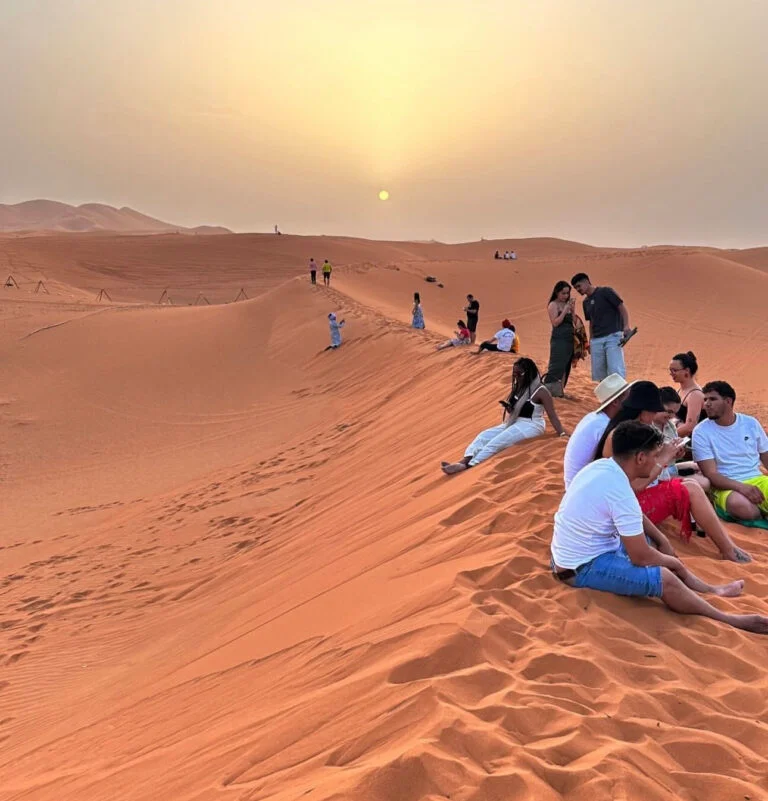
On a typical camel trekking in Merzouga, the caravan follows soft tracks between the dunes. The guide stops at a viewpoint so you can see the sun drop behind the ridges and the shadows lengthen. Distances vary, and some camps are closer to the edge of the erg while others are deeper in the sand. If you are travelling with children or are nervous, ask for a shorter ride or a camp near the dunes’ edge.



Sunset vs Sunrise: Which Camel Ride Is Better?
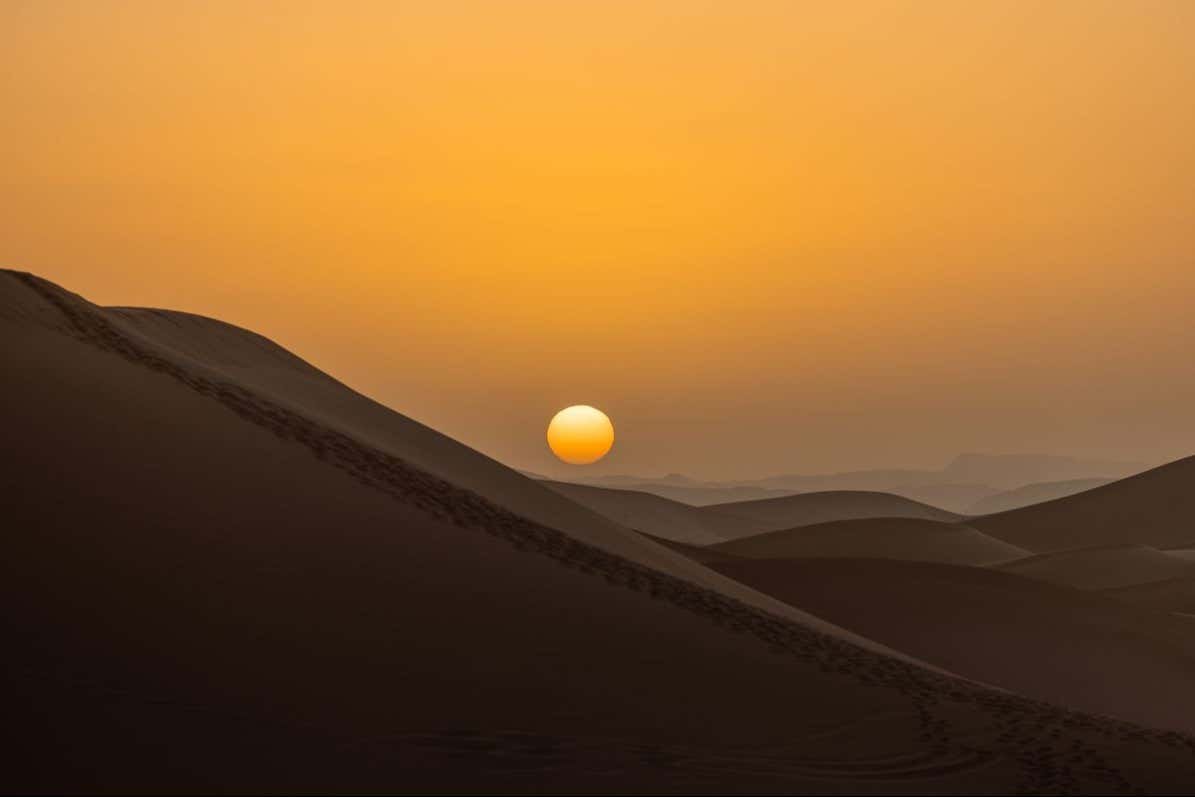
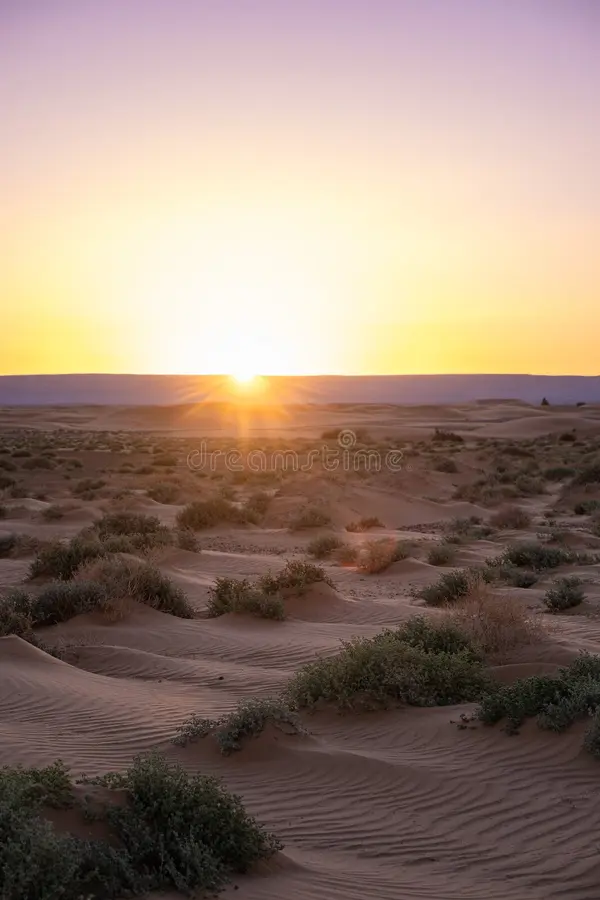
Both are special for camel trekking in Merzouga, and an overnight stay lets you enjoy both. Sunset is the classic: warm light, long shadows and a sense of arrival at the camp. Sunrise is cooler, quieter and often emptier, with soft colours on the ridges and a calm morning mood.
| Feature | Sunset trek | Sunrise trek |
|---|---|---|
| Light | Warm orange and gold | Soft pink and pale gold |
| Temperature | Warm to mild | Cool; bring a jacket |
| Atmosphere | Lively, photogenic | Peaceful, quiet |
| Best for | Arriving at camp | Waking up in the dunes |


Luxury Camp vs Standard Camp
Not every desert camp for camel trekking in Merzouga is the same. Standard camps are simple and good value, while luxury camps focus on comfort, privacy and service. Neither is wrong; it depends on your budget and expectations.
| Feature | Standard camp | Luxury camp |
|---|---|---|
| Tent | Simple tent, shared or basic | Large private tent or suite |
| Bed | Mattress and blankets | Real bed with quality bedding |
| Bathroom | Shared facilities | Often private en-suite bathroom |
| Climate comfort | Basic; blankets for cold | Heating or cooling in many tents |
| Food | Simple set menu | Multi-course dinner, fresh breakfast |
| Setting | Often closer to the edge | Often deeper in the dunes |
| Price | Lower | Higher |
See the different options on our desert camps page. If you want a quieter experience, ask for a camp placed away from other groups.
Inside a Luxury Desert Camp
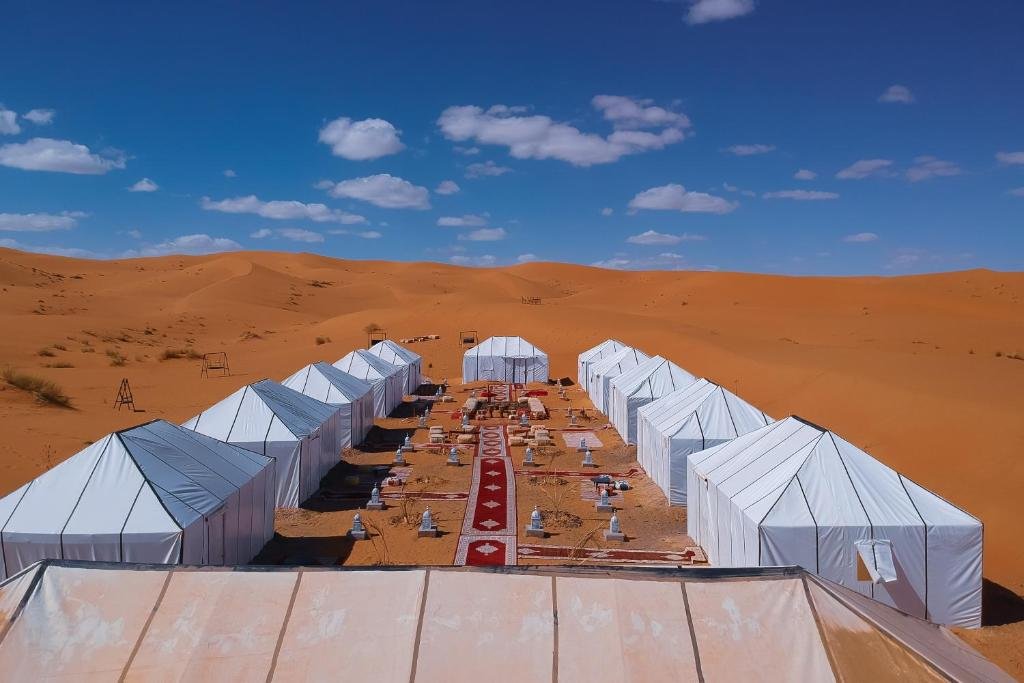
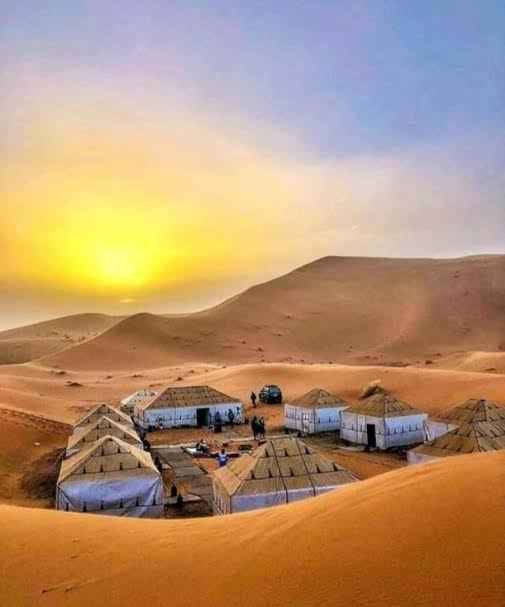
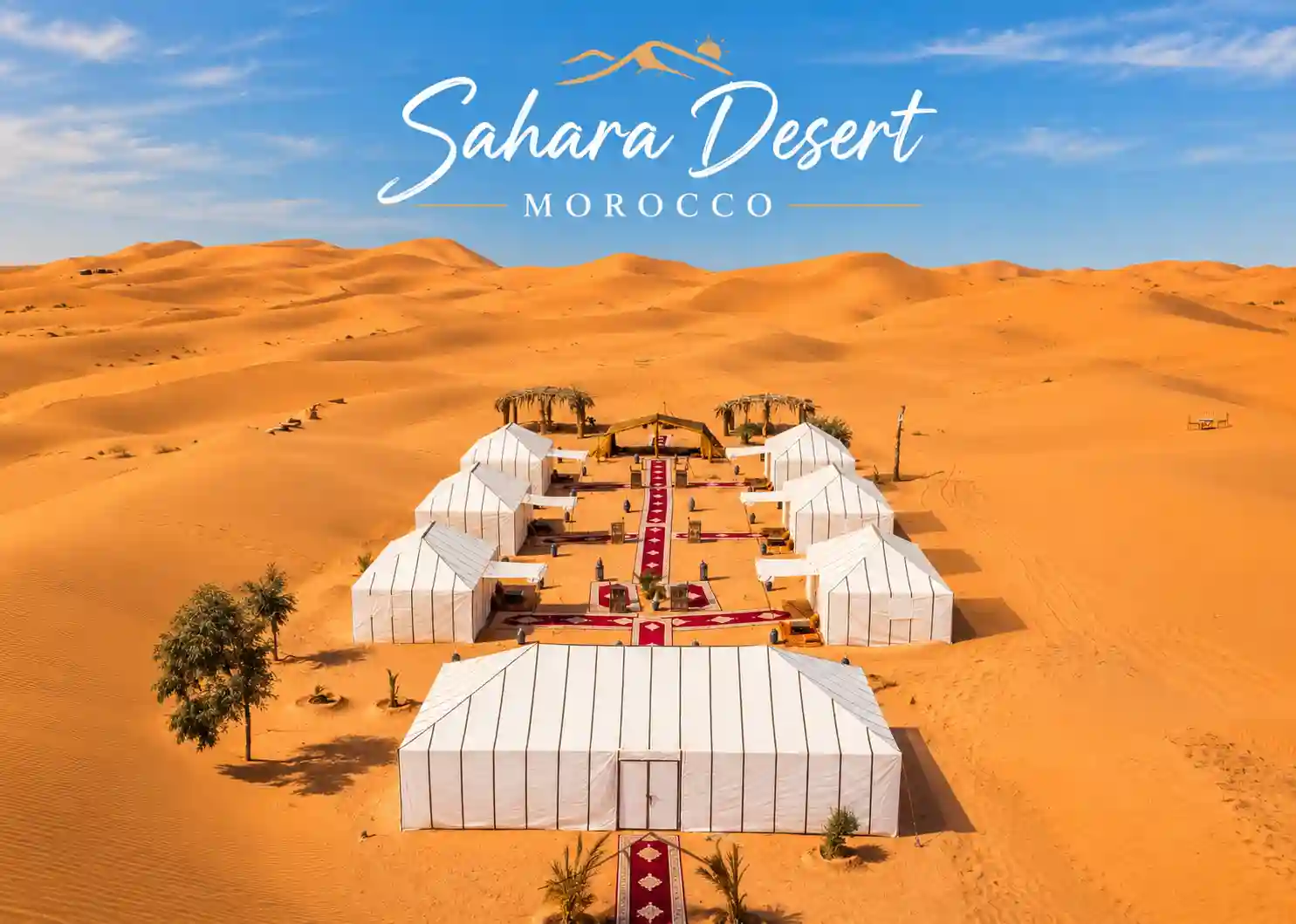
After camel trekking in Merzouga, a good luxury camp looks like a small village of tents arranged around a central area for dining and fires. From above, the white or sand-coloured tents blend into the dunes. Inside, expect rugs, lamps, a proper bed and decorations in warm Berber style.
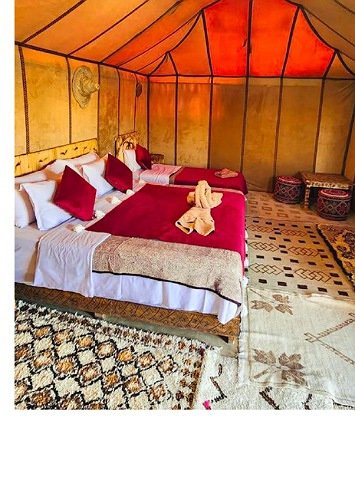

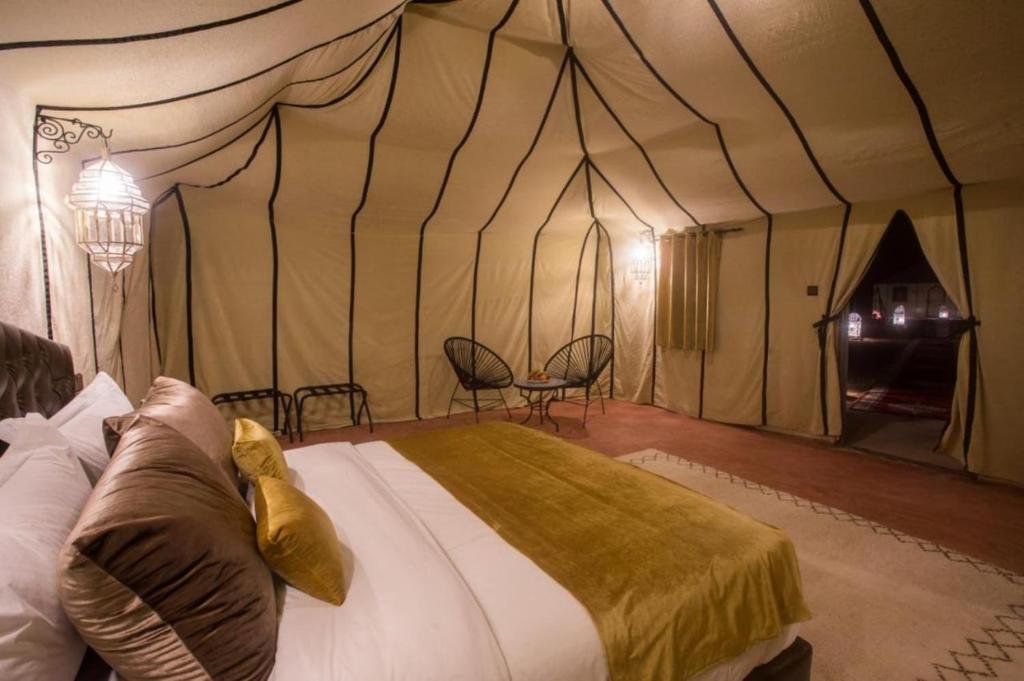


Common features of a luxury camp include:
- Large private tents or suites with real beds.
- Private bathroom with shower and toilet in many tents.
- Heating in winter and fans or cooling in summer, depending on the camp.
- A dining tent for dinner and breakfast, plus a lounge area.
- A campfire area for music and stargazing.
- Staff to help with luggage, tea and any special needs.
Dinner, Music and the Night Sky
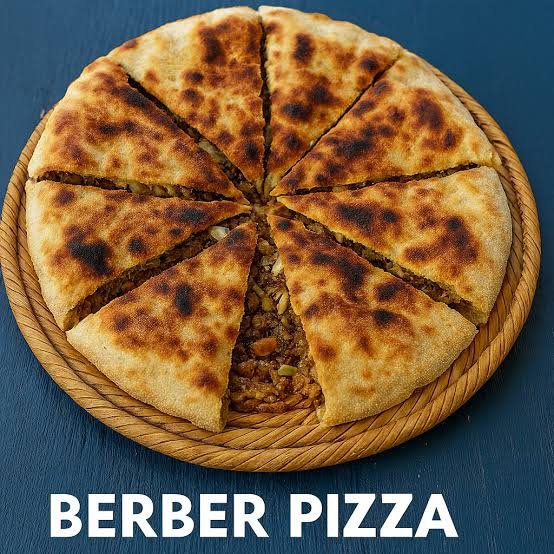
After camel trekking in Merzouga, dinner is usually served in the dining tent and often starts with soup or salads, followed by a tagine, grilled meat or vegetables, and fruit. Vegetarians and guests with allergies should tell the camp in advance so the kitchen can prepare something suitable.
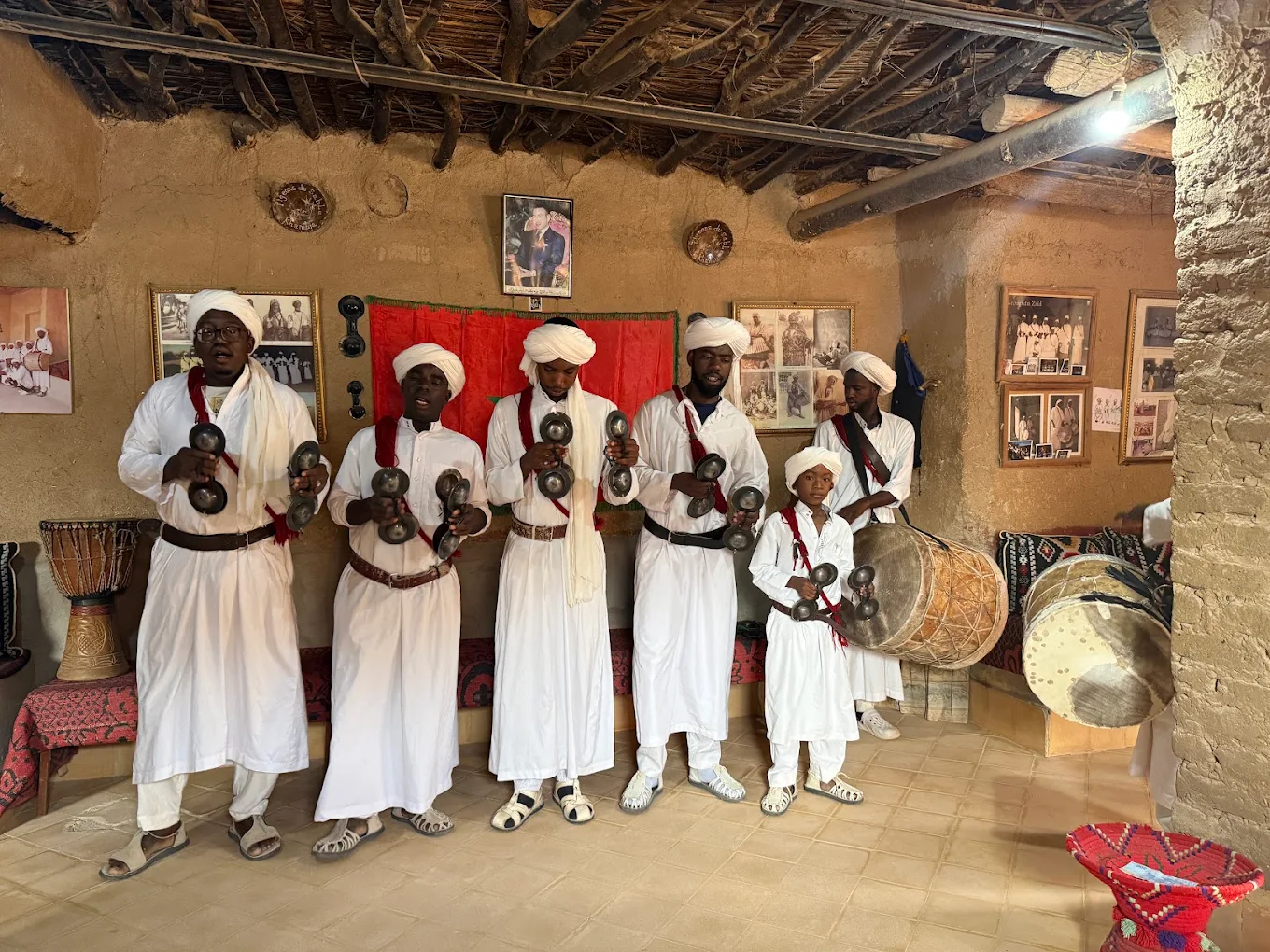
After dinner, local musicians often play drums and sing around the fire. Join in if you like, or simply listen. Then walk a little way from the lights and look up. Without city glow, the Milky Way can appear very clear on moonless nights. A warm jacket and a blanket make the wait comfortable.

Sunrise and the Return Ride
On your second morning of camel trekking in Merzouga, your host will wake you before sunrise. Wrap up warm, climb a nearby dune on foot and watch the sky change from deep blue to pink and gold. It is a quiet, almost magical moment. Then return for breakfast with bread, eggs, jam, olives and tea or coffee.
Most guests return to the village by camel or 4×4, depending on the camp and the plan for the day. Check the departure time in advance if you have onward transport. Our 2 nights in Merzouga itinerary shows how to use a second day well.
Add-On Activities Around Merzouga
If you have extra time, combine camel trekking in Merzouga with other experiences. They break up the stay and give you a fuller picture of the region.
- Sandboarding: slide down a dune on a board; fun for all ages with a little effort climbing back up.
- Quad bikes and buggies: fast, exciting rides across the sand and rocky plains.
- 4×4 tour: visit Khamlia village, nomad families, fossils and the Rissani market. See our 4×4 trips.
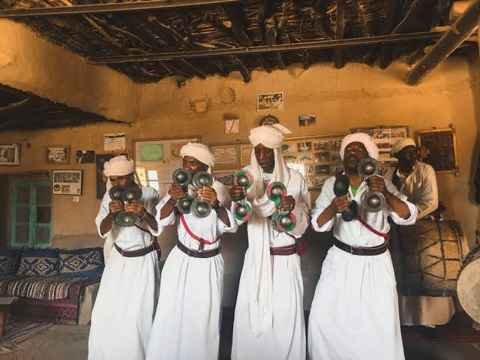
- Khamlia Gnawa music: hear traditional music from a community with roots in sub-Saharan Africa.
- Photography walk: early morning is best for clean sand and strong shadows.




Best Time for Camel Trekking in Merzouga
| Season | Conditions | Camp comfort tip |
|---|---|---|
| Spring (March to May) | Warm days, mild evenings; possible wind and dust | Bring a scarf for sand |
| Summer (June to August) | Very hot by day; the trek happens late afternoon | Choose cooling, drink plenty of water |
| Autumn (September to November) | Warm and clear; excellent light | Light jacket for the evening |
| Winter (December to February) | Pleasant days, very cold nights | Heated tent, warm layers, hat |
Spring and autumn are the most comfortable overall for camel trekking in Merzouga. Winter is a good choice if you choose a heated luxury tent. Summer is possible with the right camp and a careful schedule. For a wider look at the whole country, read our Morocco travel guide.


What to Wear and Pack
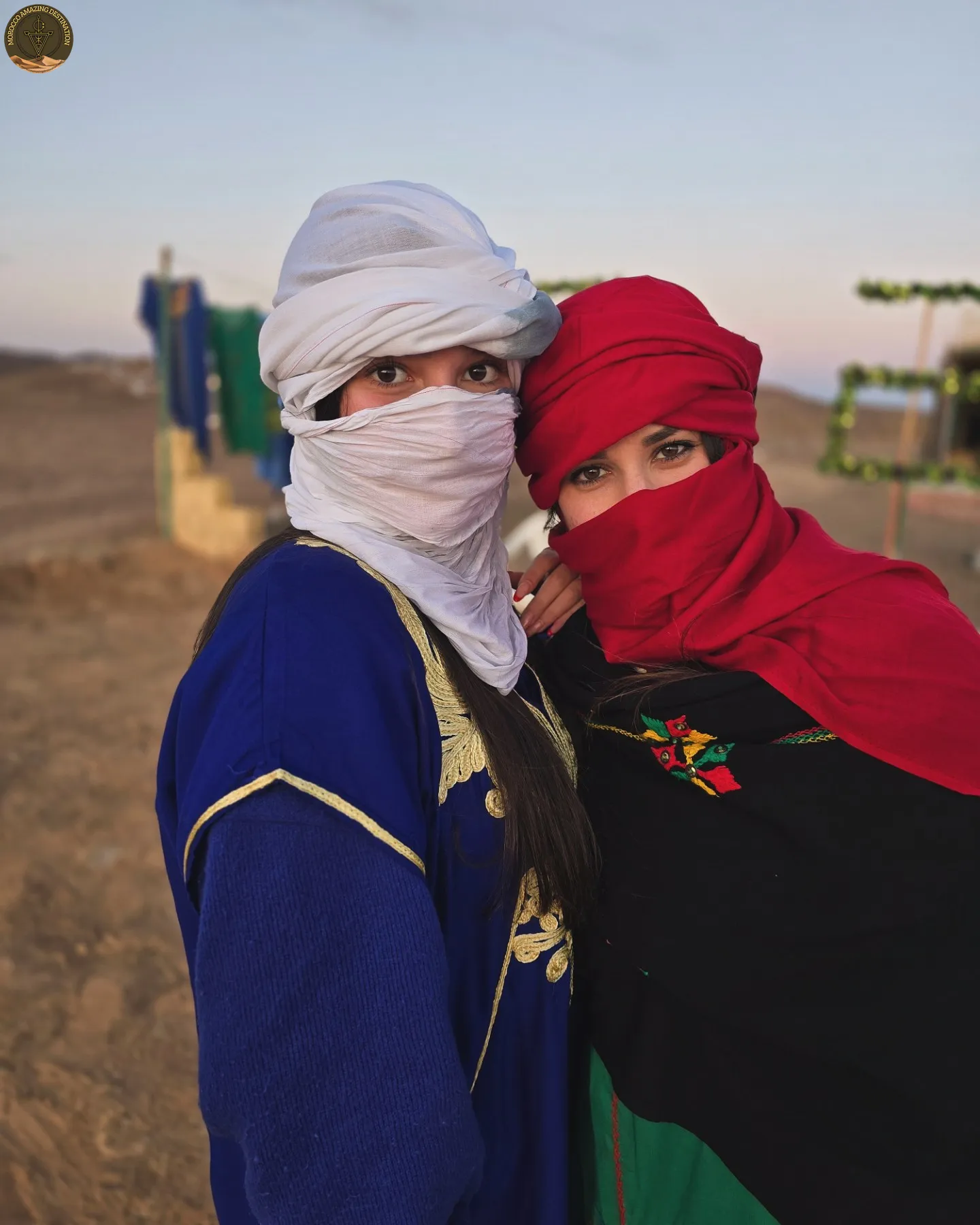
For camel trekking in Merzouga, dress for sun in the afternoon and cold at night. Layers are the secret. Light, loose, long clothing protects you from sun, sand and saddle rub.
- Long, loose trousers: more comfortable on a camel than shorts.
- Scarf or shesh: protects your face from sun, wind and sand; many camps lend or sell one.
- Closed shoes or trainers: sand gets everywhere, but they protect your feet on hot and cold sand.
- Warm layer and hat: desert evenings can be surprisingly cold.
- Sunglasses and sunscreen: the light is strong, even in winter.
- Small day bag: bring only a night bag with essentials; large luggage can stay at your hotel.
- Power bank and torch: charging can be limited at some camps.
- Toiletries and medicines: a basic kit, lip balm, wet wipes and any personal medication.

Tips for a Comfortable Camel Ride
- Hold on when mounting: the camel stands and sits in two steps; lean back as it rises.
- Sit tall and relax: let your hips move with the walk rather than stiffening.
- Keep your phone secure: use a wrist strap or zip pocket before taking photos.
- Take photos in short bursts: hold the handle with one hand at all times.
- Tell your guide if you feel uncomfortable: they can adjust the saddle or pause.
- Drink water before you go: a long ride in warm weather can be tiring.
- Be ready for sore legs: the saddle works the inner thighs, but it passes quickly.
Responsible Camel Trekking
Good operators of camel trekking in Merzouga treat their animals with care. Look for camels that appear healthy and calm, with clean saddles, fair loads, rest between trips and access to water. Avoid any provider that overloads animals, rides them in extreme midday heat or uses rough handling.
- Ask how many riders each camel carries; one rider per camel is the norm.
- Choose late-afternoon rides rather than midday departures in summer.
- Travel with local guides who know the animals and the dunes.
- Take your rubbish with you or leave it in the camp’s bins, and leave the dunes clean.
How to Get to Merzouga
Camel trekking in Merzouga starts in the far southeast of Morocco, near the Algerian border. The main ways to reach it are a private driver, a small-group tour or a rental car. Marrakech to Merzouga is roughly 560 km and about nine hours, which is why most visitors split the trip over two or three days with stops at Ait Ben Haddou and the Dades Valley.
From Fes the drive is shorter, around seven hours through the Middle Atlas and Midelt. A small airport at Errachidia serves some routes, and Ouarzazate has an airport too, though flights are limited. See the full route in our 3 days tour from Marrakech or check car rental in Morocco if you prefer to drive.
How to Choose a Luxury Camp
When you book camel trekking in Merzouga, the word “luxury” is used loosely, so ask for details and photos of the actual tents. A short checklist helps you compare camps fairly.
| Question to ask | Why it matters |
|---|---|
| Is the bathroom private or shared? | Private bathrooms are a major comfort difference |
| Is there heating or cooling? | Nights can be very cold or hot depending on season |
| How far is the camp by camel? | Determines ride length and arrival time |
| What is included? | Dinner, breakfast, camel ride, transfers and tea |
| Is the camp deep in the dunes? | More quiet and better stars away from the village |
| Are there recent reviews? | Look for photos of real guests and consistent comments |
| What is the cancellation policy? | Weather and travel plans can change |
What Affects the Price?
Prices for camel trekking in Merzouga vary widely, so we do not quote a single figure here. Instead, understand the factors that move the cost, then ask each provider for a clear written quote.
- Tent type: a private suite with bathroom costs more than a standard tent.
- Season: spring, autumn and holidays are busier and pricier.
- Meals and extras: dinner, breakfast, drinks and activities.
- Group size: private experiences cost more per person than shared ones.
- Transfers: whether pick-up, 4×4 transport or luggage handling is included.
- Number of nights: longer stays can lower the average nightly rate.
Common Mistakes to Avoid
- Booking only by price: compare tent type, meals and distance, not just the total.
- Bringing too much luggage: pack a small bag for the camp and leave the rest behind.
- Ignoring the cold: even a luxury tent needs warm clothes in winter nights.
- Rushing the stay: two nights feel far more relaxed than one for many people.
- Arriving too late: reach Merzouga in time for a sunset ride, not after dark.
- Forgetting to mention dietary needs: tell the camp ahead of time.
Camel Trekking in Merzouga: Frequently Asked Questions
How long is the camel trek in Merzouga?
It depends on the camp, but around one to two hours each way is typical. Ask your host for the exact time and request a shorter ride if you prefer.
Do I need experience to ride a camel?
No. For camel trekking in Merzouga the camels are led by a guide, and you only need to hold on and enjoy the ride.
Is camel trekking suitable for children?
Often yes. Camel trekking in Merzouga works for many children with an adult nearby and a guide who knows the pace. Tell the camp the children’s ages so they can arrange a suitable camel and a comfortable tent.
Do luxury camp tents have private bathrooms?
Many do, but not all. Always confirm before you book and ask about hot water and heating.
Is the desert cold at night?
Yes, especially from late autumn to early spring. Nights can be very cold even after a warm day, so bring warm layers.
What happens to my large luggage?
You usually leave it at your hotel or with your driver and take only a small bag to the camp.
Should I stay one night or two?
One night covers the essentials, while two nights give more time for a 4×4 tour, sandboarding or simply resting. Compare the plans in one night in Merzouga and 2 nights in Merzouga.
Is a luxury camp worth the extra cost?
For many travellers, yes, particularly in winter or for couples and families who value privacy and sleep. If you are on a tight budget and happy with simple facilities, a standard camp can still be a great experience.
Book Your Camel Trek and Luxury Camp Stay
For camel trekking in Merzouga, tell us your dates, group size and the type of tent you prefer, and we will recommend a camp, plan the camel trek timing and help with transport to Merzouga. We reply quickly and keep everything clear, including what is included.
Message us on WhatsApp at +212 620 628 083, see how to book a Merzouga tour, or use the contact page. For official tourism information you can also visit Visit Morocco.