Where Is Morocco? Location, Map, Neighbours and Where Marrakech Fits In

Where is Morocco? It is a country in the far northwest of Africa, just across a narrow strait from Spain. Where is Morocco’s coastline? It has coasts on both the Atlantic Ocean and the Mediterranean Sea, the Atlas Mountains in its centre and the Sahara Desert in the south.
This guide answers the question “where is Morocco?” in plain language. You will see where it sits on the world map, which countries are its neighbours, how its regions differ, how far the main cities are from each other and how long it takes to fly there. We also explain where Marrakech fits in, since it is the first stop for so many visitors.
If you already know the country and want a plan, jump to our Morocco travel guide. If you are curious about the city alone, our Marrakech Morocco map goes into every district. Here we start with the big picture.
Table of Contents
Where Is Morocco at a Glance
Here is the short answer to “where is Morocco?” in one table. Figures are rounded, so use them as a guide rather than exact survey data.
| Question | Answer |
|---|---|
| Continent | Africa (North Africa, Maghreb region) |
| Position | Northwest corner of Africa |
| Seas and oceans | Atlantic Ocean to the west, Mediterranean Sea to the north |
| Closest European country | Spain, across the Strait of Gibraltar (about 14 km at the narrowest point) |
| Land neighbours | Algeria to the east, Western Sahara to the south, plus the Spanish cities of Ceuta and Melilla |
| Capital | Rabat |
| Largest city | Casablanca |
| Most visited city | Marrakech |
| Highest mountain | Toubkal, about 4,167 m, in the High Atlas |
| Time zone | Usually UTC+1, with a change during Ramadan |
Where Is Morocco on the World Map?
On a world map, where is Morocco? It sits at the top-left corner of Africa. Look south of Spain and Portugal and you will find it, facing Europe across the narrow Strait of Gibraltar. That position is why Morocco has always been a crossroads between Africa, Europe and the Arab world.
Where is Morocco in terms of latitude? It lies roughly between 21 and 36 degrees north of the equator, which gives it a warm, mostly dry climate with a Mediterranean feel in the north. It is in the same latitude band as southern Spain, southern California and parts of the Middle East. Because it is so close to Europe, flights from many European cities are short, which makes it an easy first trip to Africa.
So, where is Morocco in relation to other countries people know? It is about the same distance from London as Egypt is from Athens, and it is far closer to Madrid than to Cairo. It is also the closest point in Africa to continental Europe, which explains the many ferries between Tangier and southern Spain.
Morocco’s Neighbours and Borders
To understand where Morocco is, it helps to know who its neighbours are. The country has sea borders in the north and west and land borders in the east and south.
| Direction | Neighbour | Notes |
|---|---|---|
| North | Mediterranean Sea and Spain | The Strait of Gibraltar is only about 14 km wide at its narrowest point |
| North | Ceuta and Melilla | Two Spanish cities on Morocco’s Mediterranean coast |
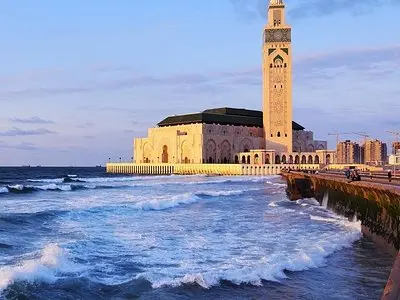
| West | Atlantic Ocean | Long coast with Casablanca, Rabat, Essaouira and Agadir |
| East | Algeria | The land border is closed to travellers |
| South | Western Sahara and Mauritania beyond | Western Sahara is a territory whose status is disputed |
For a visitor, the key point is that the eastern border with Algeria is not open for tourism, so you cannot cross overland from Merzouga. Most travellers arrive by air or by ferry from Spain and leave the same way. Always check your government’s travel advice and our Morocco visa page before you travel.
Landscape: Coasts, Mountains and Desert
Part of the answer to “where is Morocco?” is that it sits where several landscapes meet. In a few hours you can move from beach to snow to sand. That variety is the main reason travellers fall for it.
- Coasts: more than 3,000 km of shoreline on the Atlantic and the Mediterranean, with surf towns, fishing ports and cities such as Casablanca and Tangier.
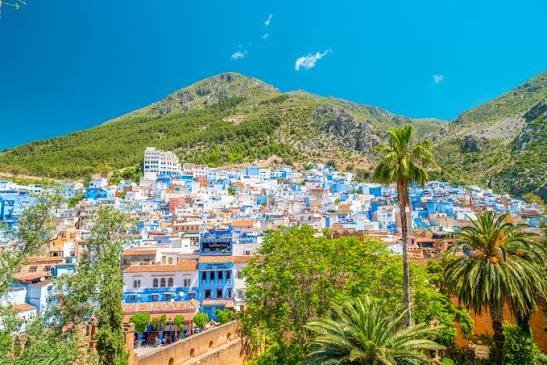
- Rif Mountains: a green range in the north, home to Chefchaouen.
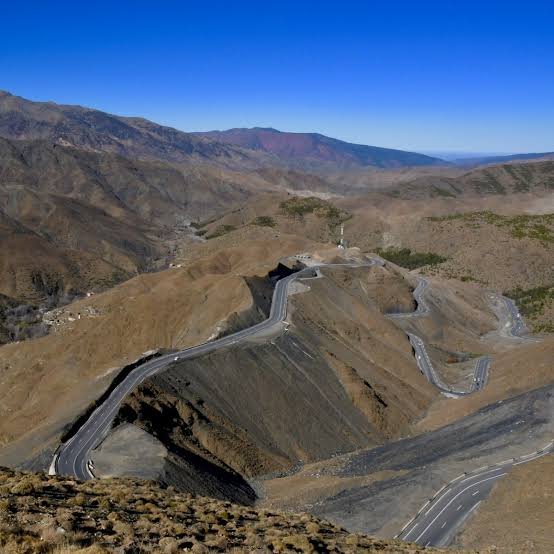
- Middle and High Atlas: forests, valleys and peaks running across the centre of the country, with Toubkal as the highest point.
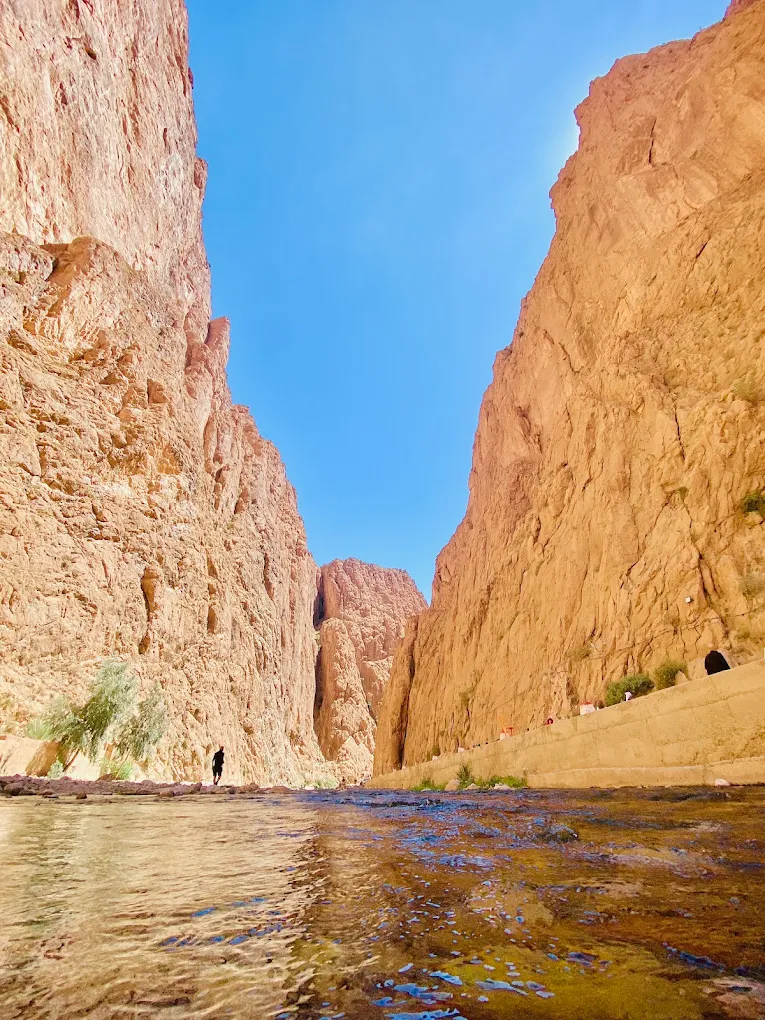
- Anti-Atlas and the pre-Sahara: red rock, gorges, oases and kasbahs on the way south.
- Sahara: the dunes of Erg Chebbi near Merzouga and Erg Chigaga near M’Hamid in the south and southeast.

Where Is Morocco Divided Into Travel Regions?
Morocco has official administrative regions, but travellers find it easier to think in terms of six travel zones. Once you know where each one is, you can plan a route that makes sense on the map.
| Travel zone | Where it is | Highlights |
|---|---|---|
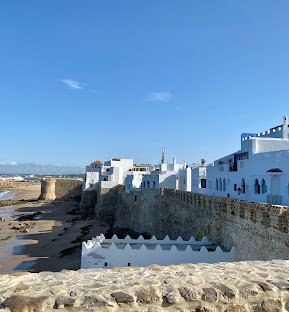
| North | Top of the country, on the Strait and Rif Mountains | Tangier, Tetouan, Chefchaouen, Asilah |
| Atlantic coast | Western edge, from Rabat to Agadir | Casablanca, Rabat, Essaouira, Agadir |
| Imperial cities | North-centre, in the Middle Atlas foothills | Fes, Meknes |
| Marrakech and High Atlas | Central-west, at the foot of the mountains | Marrakech, Imlil, Ourika, Agafay |
| South and kasbah route | South of the High Atlas | Ait Ben Haddou, Ouarzazate, Dades, Todra |
| Sahara | Far south and southeast | Merzouga, Erg Chebbi, Chigaga, Zagora |
Our Morocco travel destinations article covers the best places in each zone and helps you choose between them.


Where Is Marrakech in Morocco?
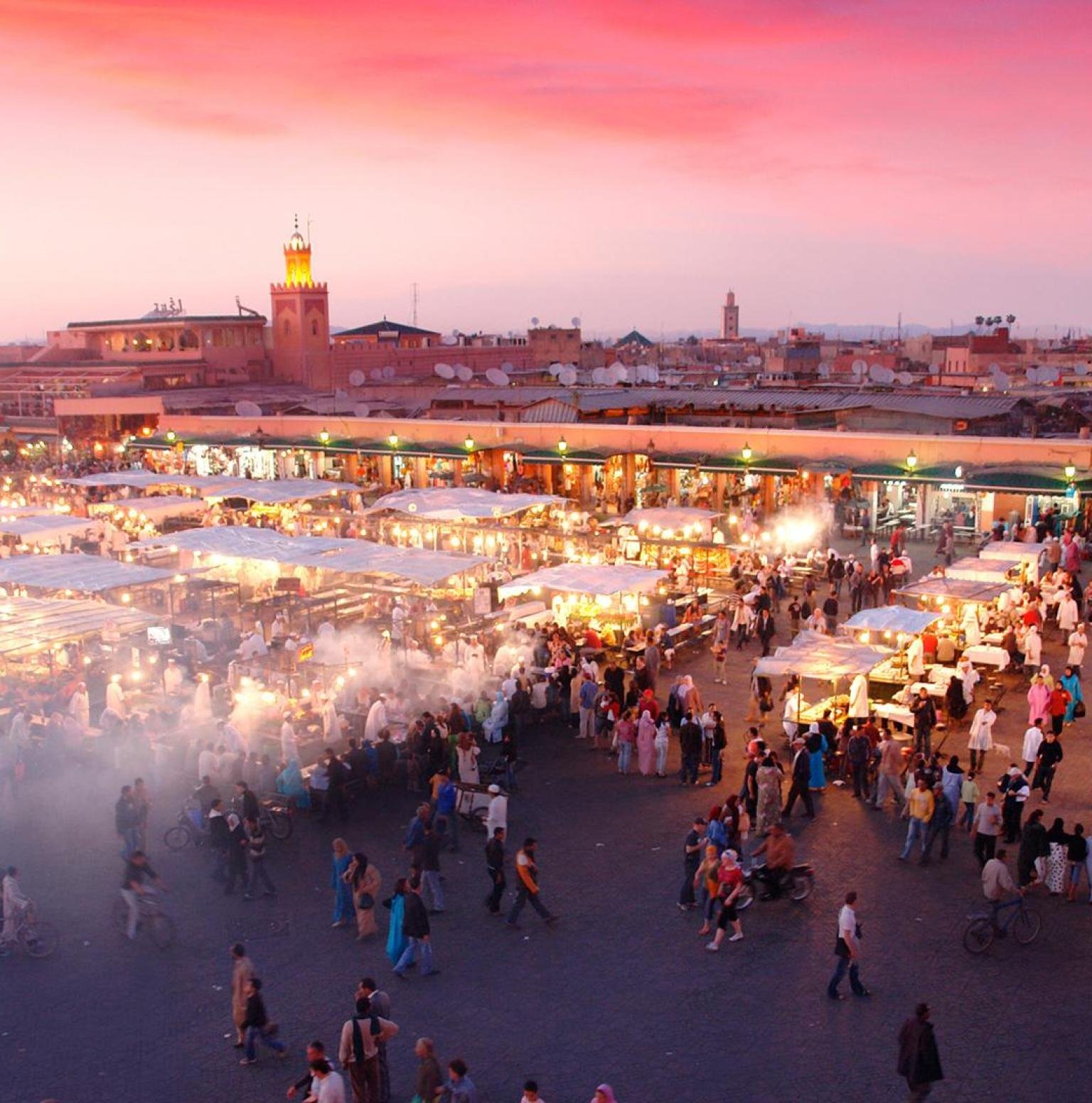
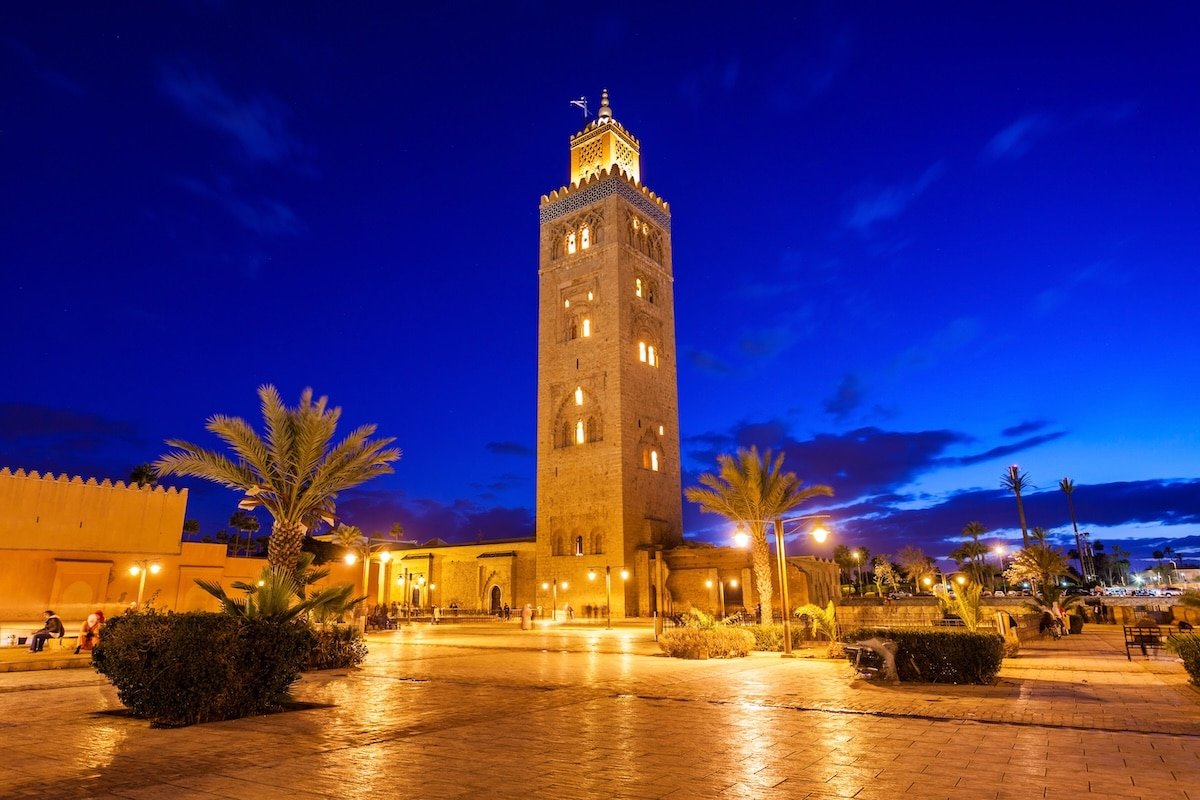
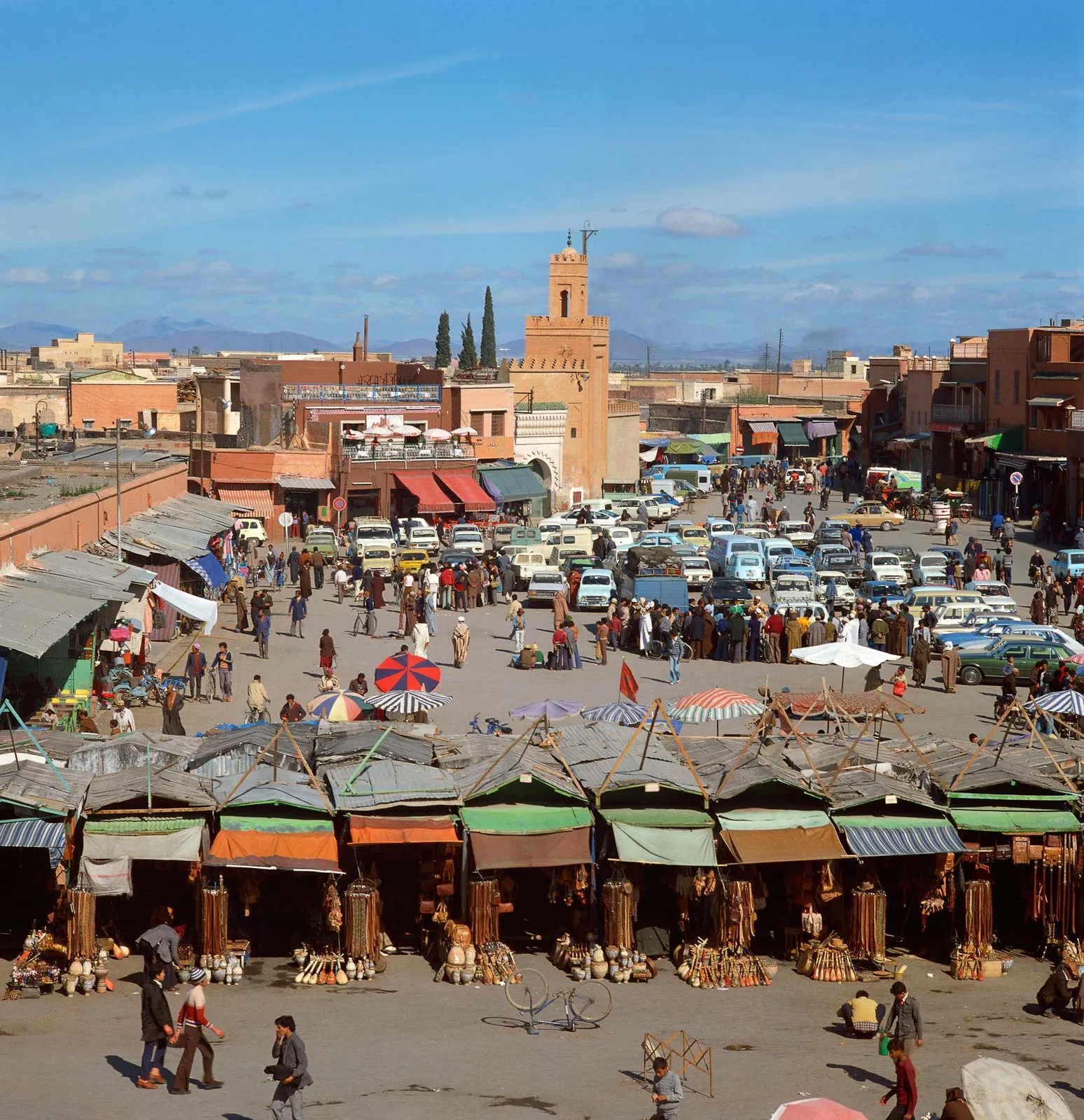
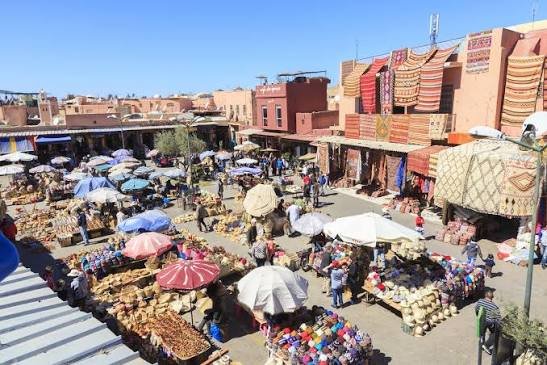
Now that “where is Morocco?” is answered, the next question is where Marrakech sits inside it. Marrakech is in the central-western part of the country, inland, on a flat plain at the foot of the High Atlas Mountains. It is not on the coast: the nearest Atlantic town is Essaouira, about 175 km to the west.
This position makes Marrakech an excellent base. The snow-capped peaks of the High Atlas are visible on a clear winter day, the Agafay desert is a short drive away, and the road south over the Tizi n’Tichka pass leads to the kasbahs and the Sahara. Casablanca, the main arrival point for many flights, is about 240 km to the north.
Marrakech is not the capital. That is Rabat. But it was the capital of several historic dynasties, and it is today the most visited city in Morocco. For a deeper look at its districts and gates, read our Marrakech Morocco map guide. For things to do, see must see places in Marrakech and how many days in Marrakech.

Distances Between Moroccan Cities
Another way to answer “where is Morocco?” is to look at distances. The country is bigger than many visitors expect, and mountain roads are slower than motorways. These are approximate road distances from Marrakech, and real driving time depends on traffic, weather and stops.
| From Marrakech to | Approx. distance | Approx. drive |
|---|---|---|
| Essaouira | 175 km | About 2.5 hours |
| Agadir | 250 km | About 3 hours |
| Casablanca | 240 km | About 3 hours |
| Rabat | 325 km | About 4 hours |
| Ouarzazate | 200 km | About 4 hours |
| Fes | 525 km | About 7 hours |
| Merzouga | 560 km | About 9 to 10 hours |
| Chefchaouen | about 600 km | About 8 to 9 hours |
| Tangier | about 770 km | About 8 hours by road, less by fast train via Casablanca |
So where is Morocco bigger than it looks? On the road: these figures explain why a common mistake is to cram too much into a short trip. If you want the south and the desert, plan at least three days for the Marrakech to Merzouga round trip. See our 3 days tour from Marrakech for a realistic schedule.
Where Is the Sahara in Morocco?
Many people who ask “where is Morocco?” are really asking where they can reach the Sahara. The Moroccan Sahara is in the south and southeast of the country, beyond the Atlas Mountains. There are two main dune areas.
- Merzouga and Erg Chebbi: in the southeast near the Algerian border, with the tallest and most accessible dunes. This is where most camel treks and desert camps are.
- Erg Chigaga near M’Hamid: further southwest, wilder and quieter, reached by 4×4 tracks.
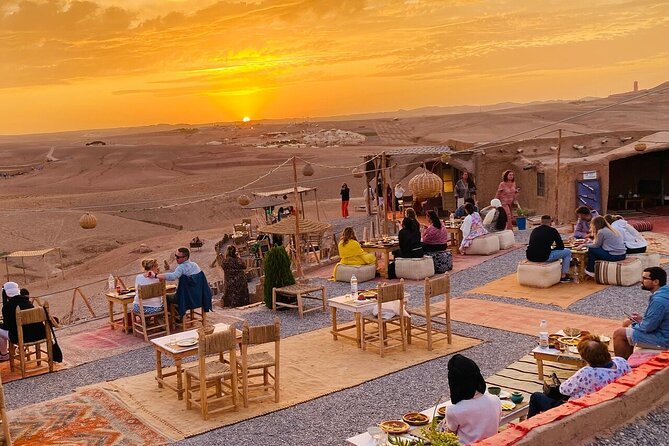
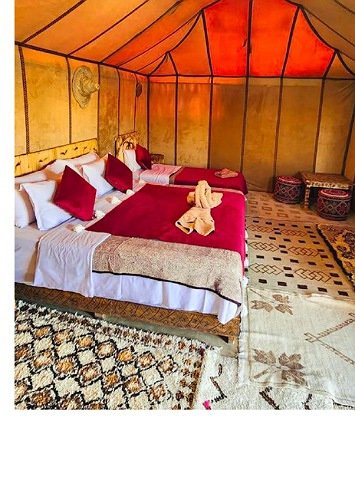
Where is Morocco’s Sahara, then? Not at Marrakech: Marrakech itself is not in the Sahara. The Agafay desert near the city is rocky and beautiful, but it is not the sandy Sahara. For the real dunes, you need to travel to Merzouga or Chigaga. Read what to do in Merzouga and one night in Merzouga for details, and see the desert camps we recommend.



How Far Is Morocco From Your Country?
Where is Morocco compared with your home? The table gives rough direct-flight times to Marrakech or Casablanca. Real times vary by route and airline, and some cities have no non-stop service, so always check current schedules.
| From | Approx. flight time |
|---|---|
| Madrid or Lisbon | About 1.5 to 2 hours |
| Paris, Brussels, Amsterdam | About 3 to 3.5 hours |
| London | About 3.5 to 4 hours |
| Rome, Milan | About 3 to 3.5 hours |
| Berlin, Frankfurt | About 4 hours |
| Istanbul | About 5 hours |
| New York | About 7 to 8 hours to Casablanca |
| Dubai, Doha | About 7 to 8 hours |
For a short break, Morocco is closer than many travellers think. If you are flying from Russia, read our guide to travel from Russia to Morocco for routes and entry rules.
How to Get to Morocco
Where is Morocco, and how do you get there? Choosing how to get there is simple. Most visitors fly, and a few come by ferry from Spain.
- Casablanca (CMN): the busiest international hub, with long-haul and regional connections.
- Marrakech (RAK): many direct European flights, popular for city and desert trips.
- Fes, Tangier and Agadir: useful for the north, the imperial cities or the Atlantic coast.
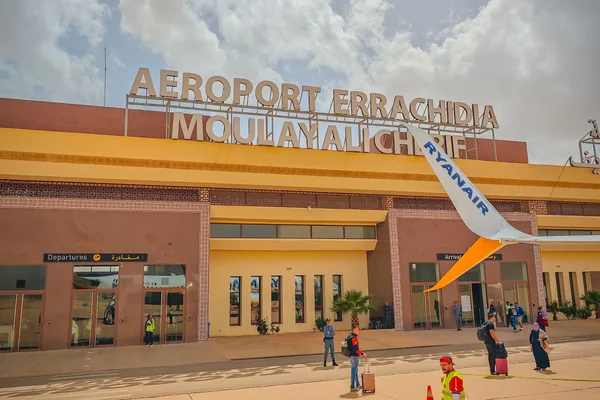
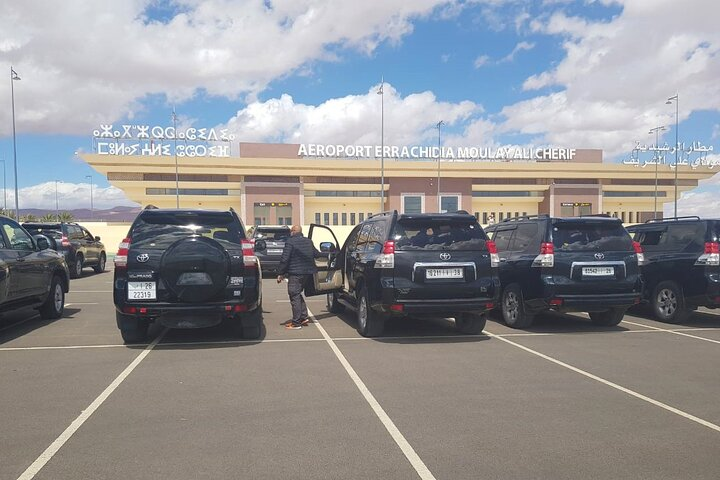
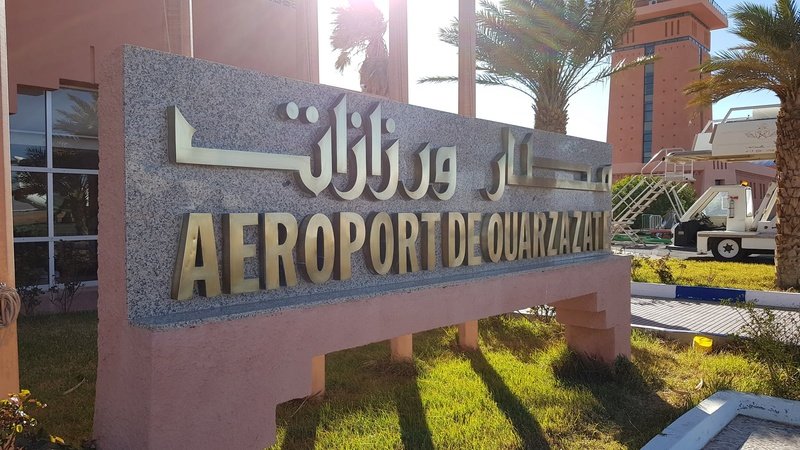
- Errachidia and Ouarzazate: small regional airports closer to the desert, with limited flights.
- Ferry: crossings from southern Spain to Tangier and other northern ports, often combined with a road trip.
Climate Across Morocco
Where is Morocco on the map? That position explains its climate. The north and the Atlantic coast have a mild Mediterranean climate, the mountains are cooler with snow in winter, and the interior and south are hot and dry. Marrakech has hot summers and mild winters, while the Sahara is hot by day and can be cold at night.
| Area | Climate feel | Good time to visit |
|---|---|---|
| North and Mediterranean | Mild, wetter in winter | Spring and autumn |
| Atlantic coast | Cool breezes, pleasant summers | Summer and early autumn |
| Marrakech and the plains | Hot summers, mild winters | Spring and autumn |
| High Atlas | Cool to cold, snow in winter | Late spring to autumn for hiking |
| Sahara and the south | Very hot summers, cold winter nights | Spring and autumn |
For more seasonal advice, see the best-time table in our Morocco travel guide.
Time Zone, Language and Practical Facts
Where is Morocco in time and culture? Knowing this helps you plan the small details. Morocco usually keeps UTC+1 all year, which is the same as Central European winter time. During Ramadan the clocks move back one hour, and the dates change each year, so check ahead if you are meeting someone or booking transport.
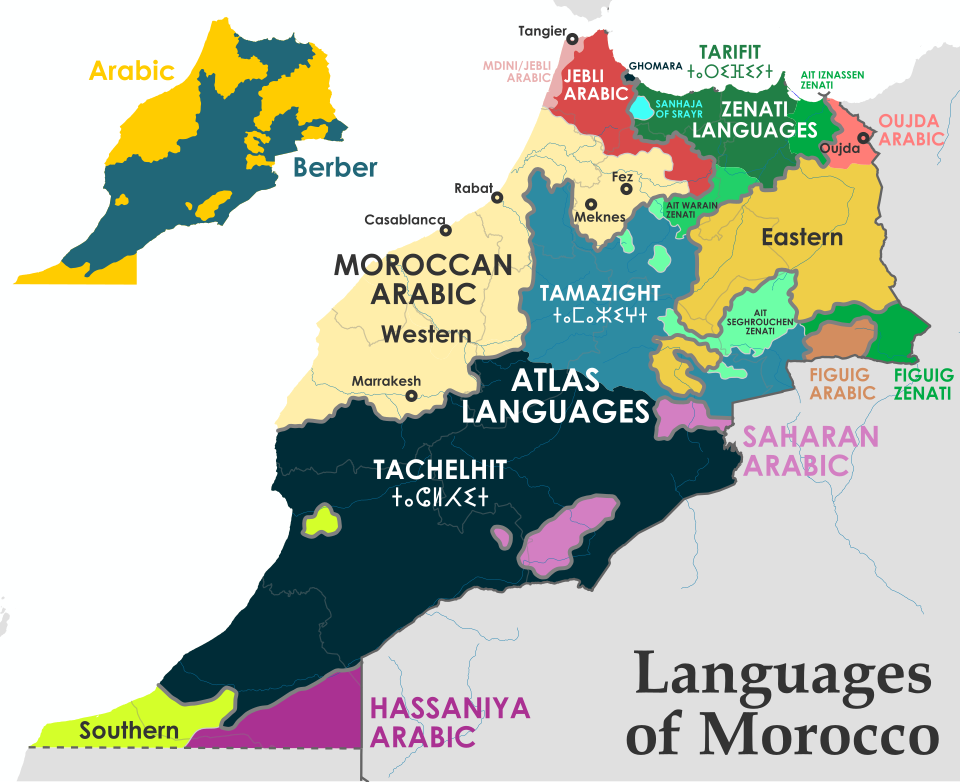
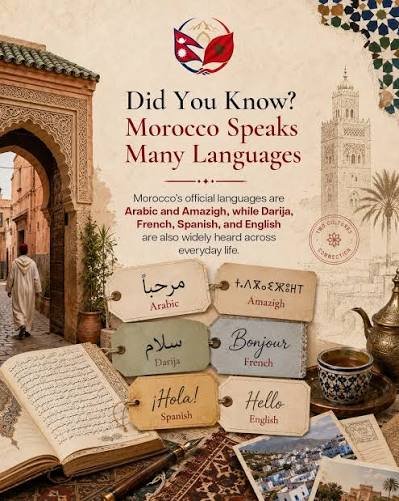
- Languages: Arabic and Amazigh are official, French is common, and English is spoken in tourist areas.
- Currency: the Moroccan dirham (MAD).
- Electricity: 220 V with European two-pin plugs.
- Religion: the country is mainly Muslim, so dress modestly in towns and respect local customs.
- Visa: many nationalities can enter visa-free for a limited stay; confirm for your passport.

Plan Your Route Using the Map
With the map in your head and the question “where is Morocco?” answered, building a route becomes simple. The best trips follow a rough loop, avoid doubling back and give long drives a purpose. Here are three popular patterns based on where Morocco’s main sights are.
| Route | Path on the map | Time |
|---|---|---|
| Classic desert loop | Marrakech, Ait Ben Haddou, Dades, Merzouga, return | 3 to 5 days |
| Imperial cities and desert | Casablanca, Fes, Merzouga, Dades, Marrakech | 7 to 10 days |
| North to south | Tangier, Chefchaouen, Fes, Merzouga, Marrakech | 10 to 14 days |
You can fly into one city and out of another to save time. A private tour handles long distances comfortably, and you can see options on our 4×4 trips page. If you prefer to drive yourself, read about car rental in Morocco.
Common Mistakes When Reading the Map
- Thinking Marrakech is near the dunes: the Sahara is a long drive away, about nine hours to Merzouga.
- Believing Marrakech is the capital: the capital is Rabat.
- Underestimating mountain roads: a short distance on the map can take hours across the Atlas.
- Expecting an overland route to Algeria: the border is closed to travellers.
- Planning too many cities: distances are large, so fewer stops makes a better trip.
- Mixing up the Sahara and the Agafay desert: only the south has the big sand dunes.
Where Is Morocco: Frequently Asked Questions
Where is Morocco located in the world?
Where is Morocco located? Morocco is in the northwest of Africa, bordered by the Atlantic Ocean, the Mediterranean Sea, Algeria and Western Sahara. It faces Spain across the Strait of Gibraltar.
Is Morocco in Europe or Africa?
Where is Morocco, Europe or Africa? It is in Africa. At the Strait of Gibraltar it is only about 14 km from Europe, but it is a North African country.
Where is Marrakech in Morocco?
Marrakech is in the central-western part of the country, inland, at the foot of the High Atlas Mountains. It is about 240 km south of Casablanca.
What is the capital of Morocco?
The capital is Rabat. Casablanca is the largest city and Marrakech is the most visited.
Where is the Sahara Desert in Morocco?
In the south and southeast, mainly around Merzouga (Erg Chebbi) and M’Hamid (Erg Chigaga). Merzouga is about 560 km from Marrakech.
How long is the flight to Morocco?
From Spain it is under two hours, from Paris or Rome about three hours, from London about four hours and from New York about seven to eight hours.
How close is Morocco to Spain?
Where is Morocco closest to Europe? Very close. The Strait of Gibraltar is about 14 km wide at the narrowest point, and ferries connect southern Spain with Tangier and other northern ports.
How long do I need to explore Morocco?
A week to ten days is a good start. With only a few days, choose one zone, such as Marrakech and the desert, rather than trying to see everything.
Plan Your Trip to Morocco With Local Help
Now that you can answer “where is Morocco?” and see how the regions fit together, we can help you turn the map into a real itinerary. Tell us your dates, your arrival city and what you want to see, and we will suggest a realistic route with the right transport and desert camp.
Message us on WhatsApp at +212 620 628 083, see how to book a Merzouga tour, or use the contact page. For official tourism information you can also visit Visit Morocco.